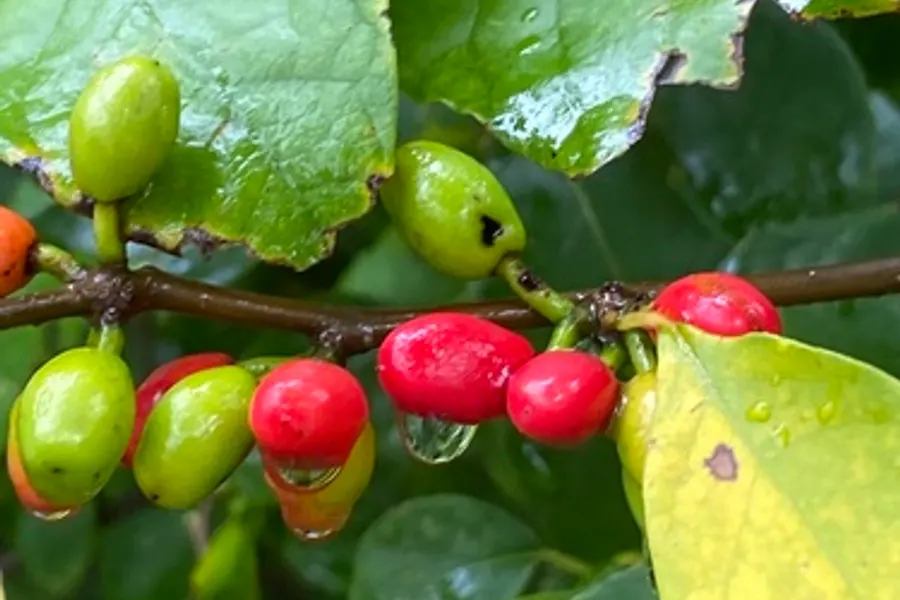
The understorey is what you actually walk through, and on the dry ridges here a great deal of it is one plant. These are the shrubs the guide covers and how to tell them apart.
Booking
None. Sites are first come, first served.
Fee
$10 a night for a standard site, $20 for a group site, paid at headquarters. Maryland DNR.
Check in
Sign the sheet at headquarters when you arrive, then go to the site.
Is it free tonight?
This page cannot know. The app shows what the sign-up sheet last showed, with the photo's age.
Every photograph here is openly licensed and credited to the person who took it.
The recordings are in the app — open the nature
guide to hear them.
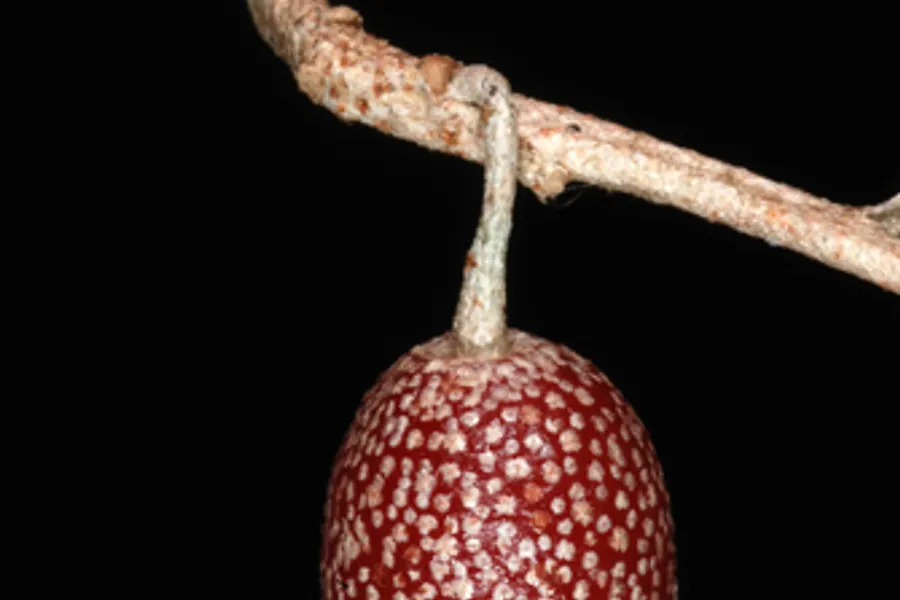
A large loose shrub whose leaves have a silvery, scaly underside that flashes in the breeze; fragrant pale-yellow flowers in spring, then speckled silvery-red berries.
Where to look
Old fields and disturbed sunny areas
When
Fragrant flowers May; red speckled berries Sep–Oct
Months
May, Sep, Oct
Easily confused with
The distinctive silver-scaly leaf underside sets it apart from native shrubs.
Invasive
Spreads fast because birds scatter the seeds. Report to MD iMapInvasives (imapinvasives.org); pull seedlings and cut mature shrubs before the berries ripen.
Blueberry's scrappier twin: same knee-high habit on the same dry ridges, but the berries are glossy black-purple with crunchy seeds, and the leaf undersides glitter with tiny resin dots.
Where to look
Mixed into the blueberry colonies on ridgetops. Tilt a leaf to the light to check for the resin dots
When
Flowers May; berries July–August
Months
May to August
Easily confused with
Lowbush blueberry: lighter blue berries, no resin dots.
Do not touch
Edible like blueberry, though seedier, richer, and just as popular with bears.
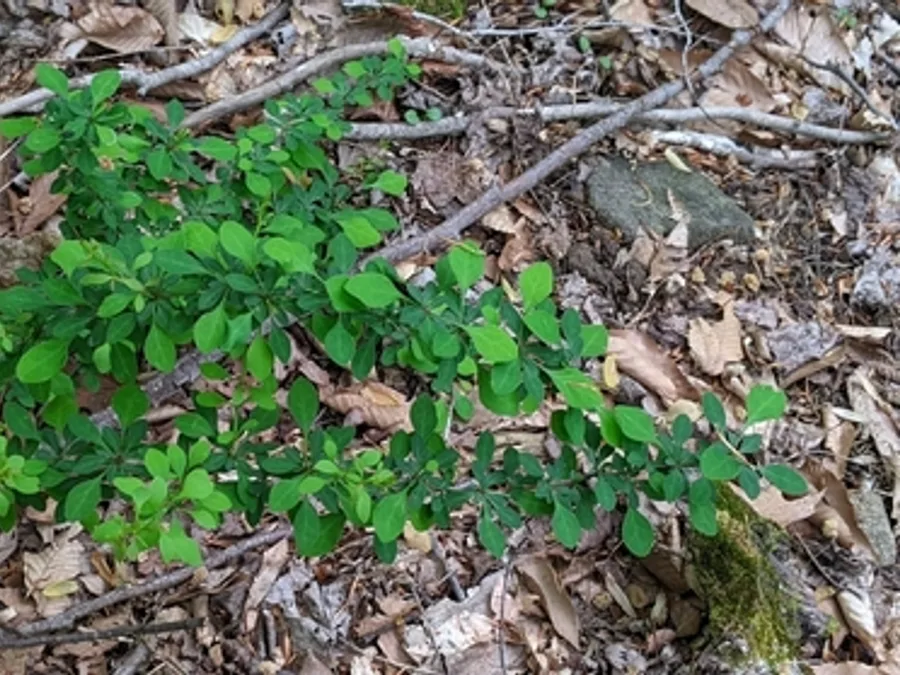
A compact, dense shrub with small spoon-shaped leaves, sharp single spines at each node, and bright red oval berries that hang on into winter; scratch the bark and the inner wood is yellow.
Where to look
Shady understory and forest edges
When
Red berries late summer through winter
Months
August to November
Do not touch
Sharp spines will prick bare hands. It also shelters more ticks than open ground, so check yourself after pushing through a patch.
Invasive
Dig or pull whole plants (wear gloves for the spines) before the berries spread. Don't plant it as an ornamental: that's how it escaped into the woods.
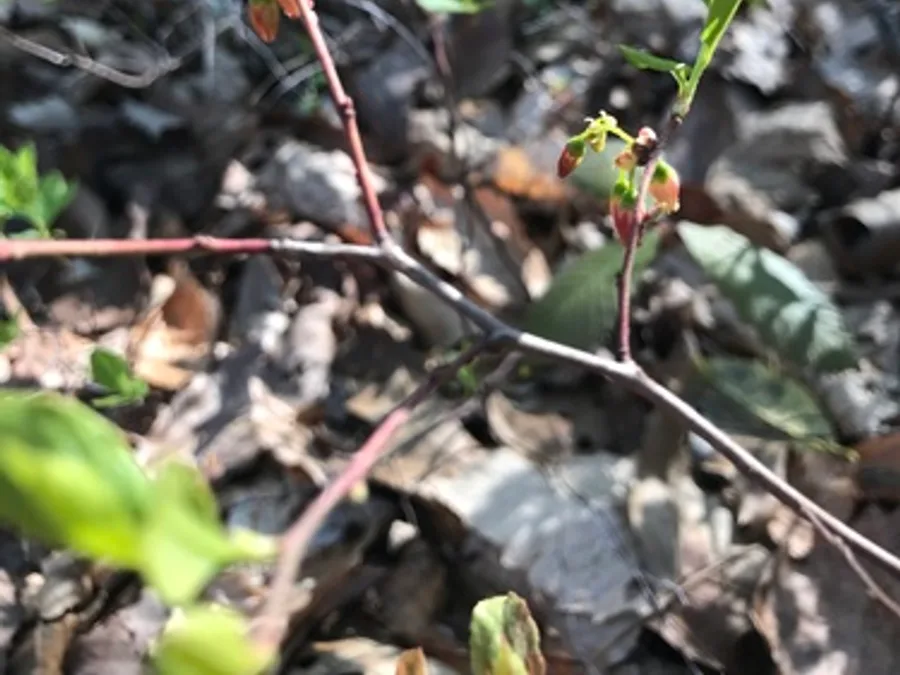
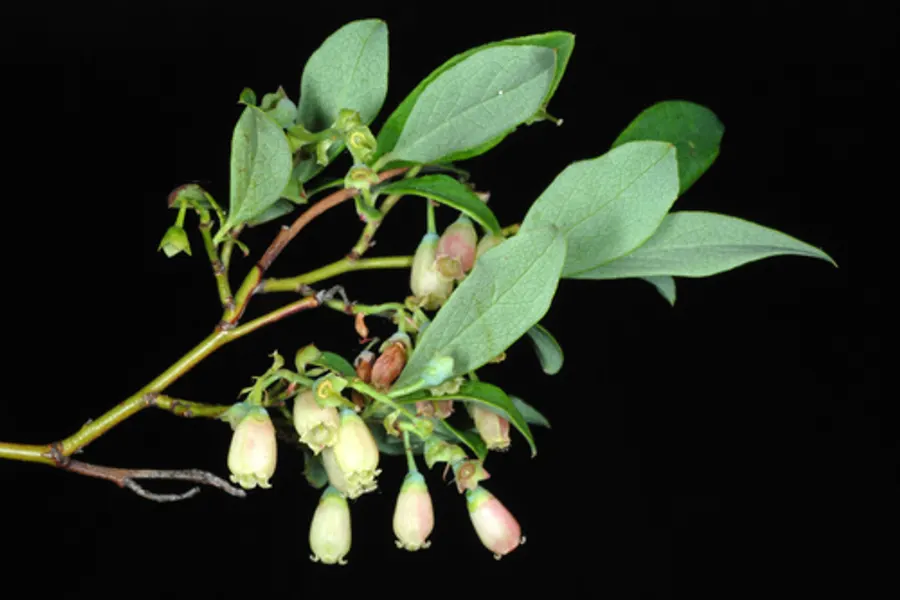
Knee-high thickets of small oval leaves on green wiry stems, white bell flowers in spring, and real wild blueberries in July, smaller and sharper-tasting than store ones.
Where to look
Dry acid ridgetops under the oaks and pines. Whole hillsides of it in places
When
Flowers April–May; berries late June–August; wine-red fall color
Months
April to October
Easily confused with
Black huckleberry grows right alongside: its berries are darker and seedier, and its leaves have tiny golden resin dots underneath.
Do not touch
The berries are edible and excellent, but be sure it's blueberry, and leave plenty for the bears and grouse that depend on the crop.
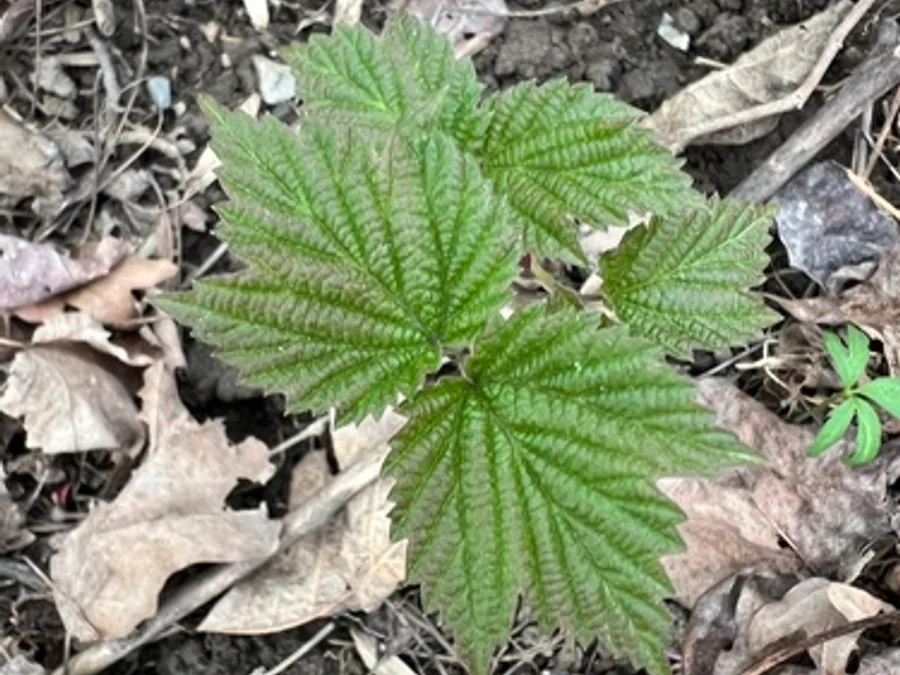
A waist-high understory shrub whose leaves do a convincing maple impression (three lobes, fuzzy underneath) with flat clusters of small white flowers, then blue-black berries.
Where to look
Dry shaded understory everywhere. One of the most common shrubs underfoot at GRSF
When
Flowers May–June; berries and dusty pink-purple leaves in fall
Months
May to October
Easily confused with
Actual maple seedlings have opposite leaves too, but no flower clusters or berries, and they'll be single stems, not spreading shrubs.
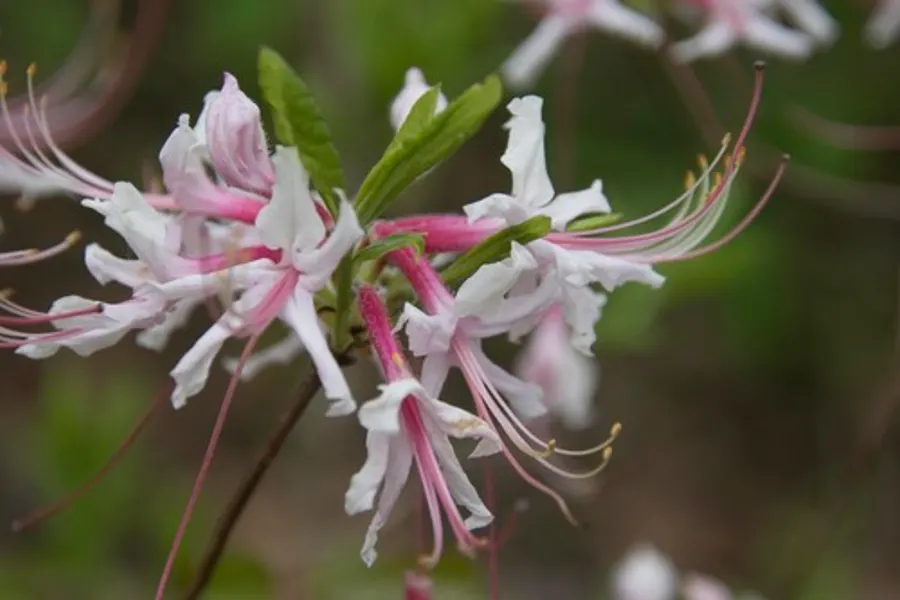
A leggy open shrub that fires off clusters of pale-pink trumpet flowers with long curling stamens in late April, usually before its leaves fully unfold.
Where to look
Dry open woods and ridge shoulders. This is the native wild azalea, no garden required
When
Blooms late April–May; unremarkable green the rest of the year
Months
April to May
Easily confused with
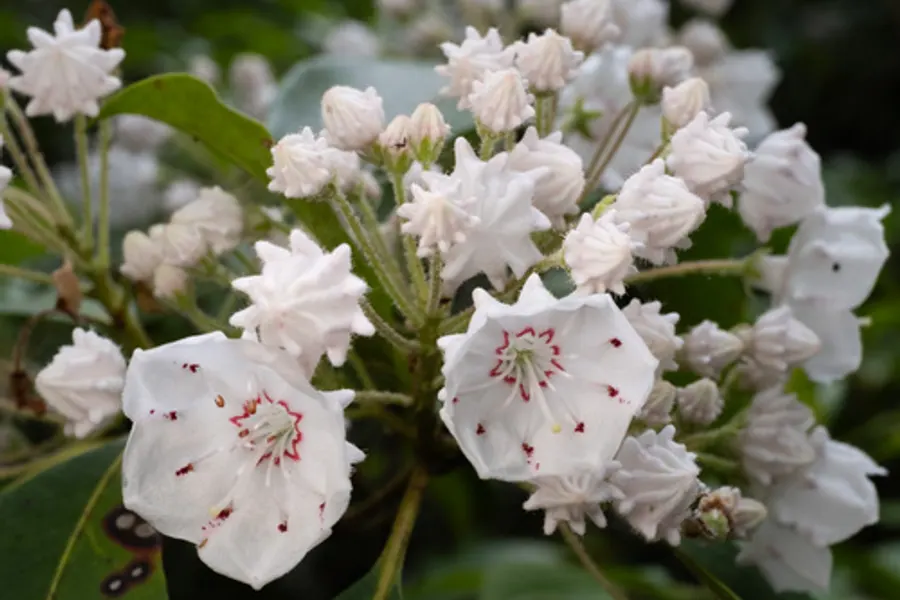
Mountain laurel blooms later with cup-shaped freckled flowers and evergreen leaves; pinxter's trumpets come on bare-ish twigs.
Do not touch
Like its cousin mountain laurel, all parts are toxic if eaten. Admire, don't nibble.
A rounded shrub whose leaves and twigs smell strongly of citrus and spice when scratched; hazy yellow flowers dot the bare branches in earliest spring.
Where to look
Moist woods and stream edges throughout GRSF, where it's one of the most common shrubs