Two of these will spoil a trip if you sit in them and three of them are invasive. Both are worth being able to name before you pitch a tent against a tree.
Booking
None. Sites are first come, first served.
Fee
$10 a night for a standard site, $20 for a group site, paid at headquarters. Maryland DNR.
Check in
Sign the sheet at headquarters when you arrive, then go to the site.
Is it free tonight?
This page cannot know. The app shows what the sign-up sheet last showed, with the photo's age.
Every photograph here is openly licensed and credited to the person who took it.
The recordings are in the app — open the nature
guide to hear them.
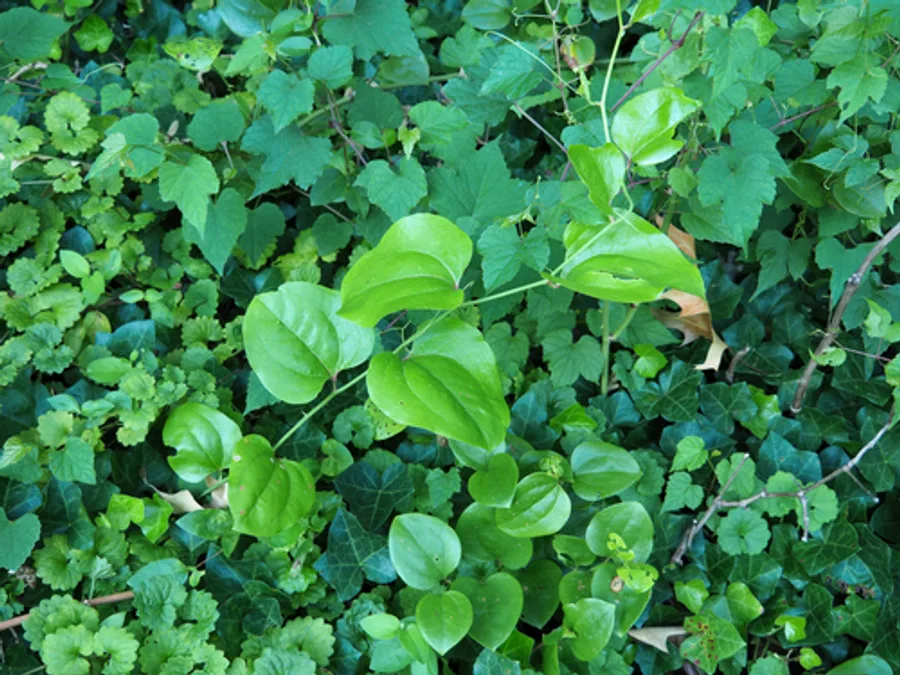
A green-stemmed vine with round glossy leaves, paired curling tendrils, and stout green thorns, forming tangles that will decide your route for you.
Where to look
Thickets, old clearings, and forest edges: bushwhackers' nemesis, wildlife's fortress
When
Green stems and thorns year-round; blue-black berries in fall
Easily confused with
Multiflora rose has feathery compound leaves and curved thorns on woody stems; greenbrier's stems are smooth green and its leaves simple and rounded.
Do not touch
The thorns rake skin and grab clothing. Go around, not through. A greenbrier tangle is also exactly where rabbits and grouse shelter, so it earns its keep.
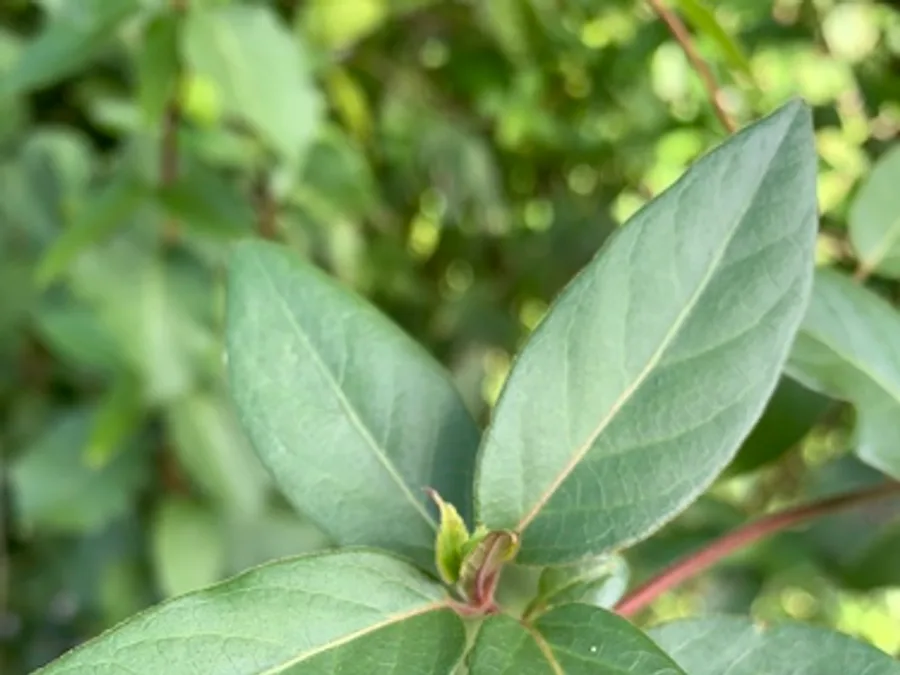
A trailing and climbing vine with paired oval leaves and sweetly fragrant tubular flowers that open white and age to yellow; often stays green into winter.
Where to look
Blanketing shrubs, fences, and the forest edge
When
Fragrant flowers May–June; semi-evergreen leaves
Months
May to July
Easily confused with
Native honeysuckles have their upper leaf pairs fused into a disk around the stem; this vine's leaves stay separate.
Invasive
Smothers native plants. Pull seedlings and cut established vines; don't plant it, and keep it from spreading along edges.
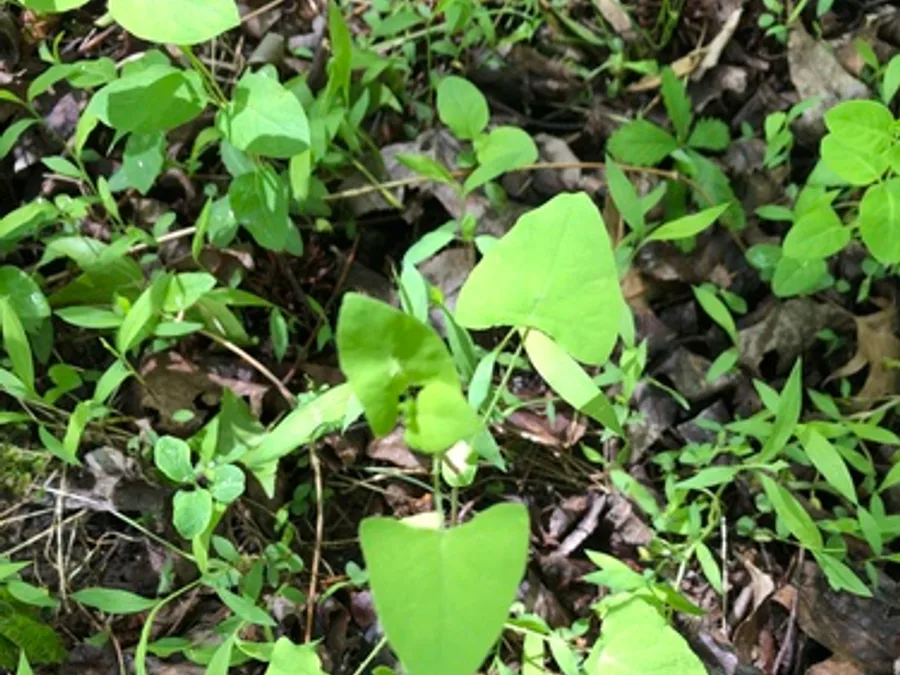
A lime-green vine with distinctive triangular leaves and small round leafy 'saucers' (cups) that the stem passes through; the stems and leaf backs bear tiny backward-curved barbs.
Where to look
Sprawling over shrubs and along sunny, damp roadsides and edges
When
Fast growth summer; metallic-blue berries late summer–fall
Months
June to September
Do not touch
The tiny recurved barbs catch and scratch bare skin, so handle with gloves if you pull it.
Invasive
An aggressive annual that can grow inches a day. Pull it before the blue berries form (gloves for the barbs), and don't let seed hitch a ride out on gear.
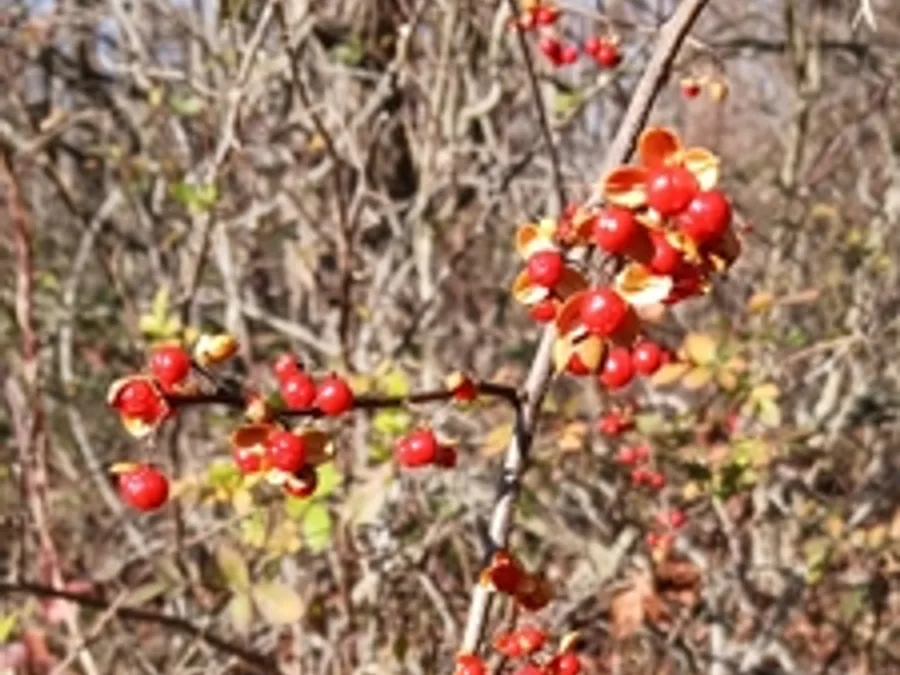
A twining vine that climbs and strangles trees; in fall it's studded all along its stems with round yellow capsules that split to show bright red-orange berries.
Where to look
Twisting up trees and shrubs along edges and roadsides
When
Round orange-red fruit Sep–Nov
Months
September to November
Easily confused with
Native American bittersweet carries its fruit only in clusters at the branch tips; the invasive one has fruit strung all along the stem.
Invasive
The strangling vines can topple trees. Cut the vines at the base, and don't take the berry-laden stems for wreaths. That's a major way it spreads.
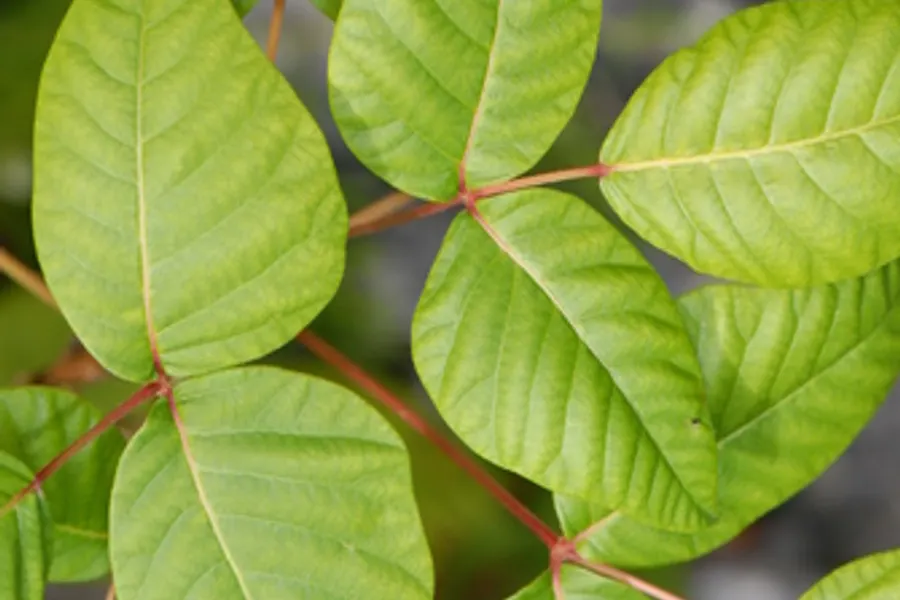
Always three leaflets, the middle one on a longer stalk, often shiny and reddish when young; grows as ground cover, a low shrub, or a hairy 'rope' vine climbing tree trunks.
Where to look
Everywhere at GRSF: trailsides, campsites, and up tree trunks
When
Leaves spring–fall; hairy bare vines visible even in winter
Months
April to October
Easily confused with
Virginia creeper has five leaflets, not three; blackberry and raspberry canes are prickly and have toothed leaflets. Poison ivy has no thorns.
Do not touch
Don't touch it. The oil causes a severe itchy, blistering rash. 'Leaves of three, let it be,' and steer clear of the fuzzy rope vines on trees. If you brush it, wash the skin with soap and water as soon as you can.
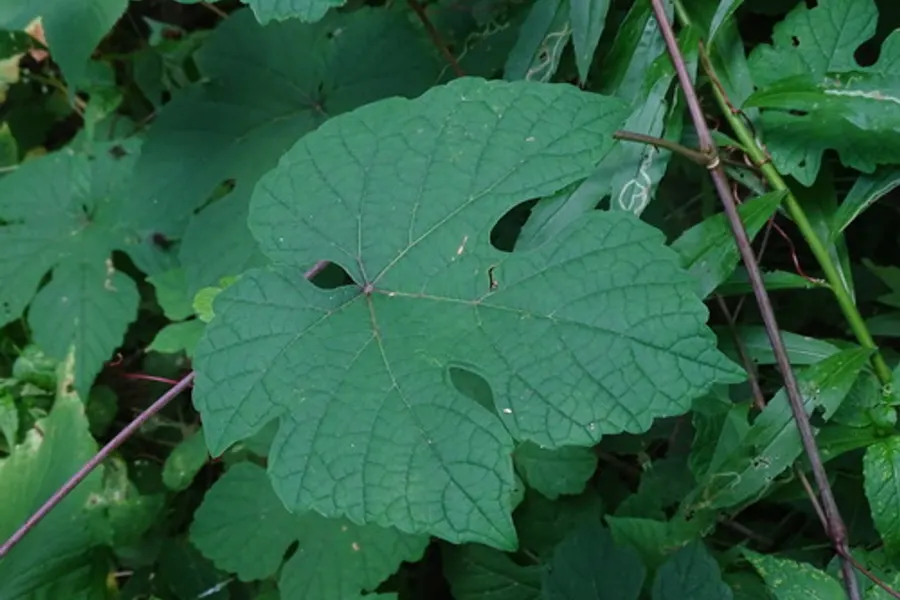
Oriental bittersweet wraps and strangles with round yellow-orange berries; grape hangs loose with true grape clusters and peeling bark.
Do not touch
Wild grapes are edible but tart. Be certain it's grape: real grapevines have shreddy bark and forked tendrils. Moonseed, a toxic mimic, has smooth bark and no tendrils.
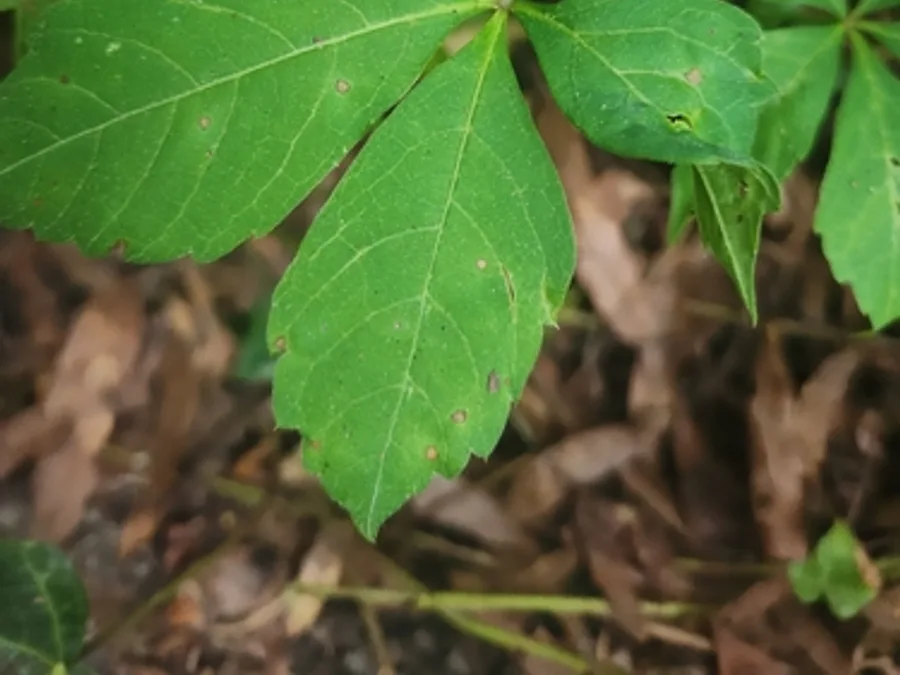
A climbing vine with leaves split into five leaflets spread like fingers; it turns a brilliant scarlet in early fall and carries clusters of blue-black berries.
Where to look
Climbing tree trunks, fences, and rocks along trails and edges
When
Green all summer; fiery red in early fall
Months
June to October
Easily confused with
Poison ivy has three leaflets per leaf; creeper always has five, an easy way to tell them apart.
Do not touch
Harmless to brush against, but the blue berries are toxic if eaten, and the sap can irritate sensitive skin.