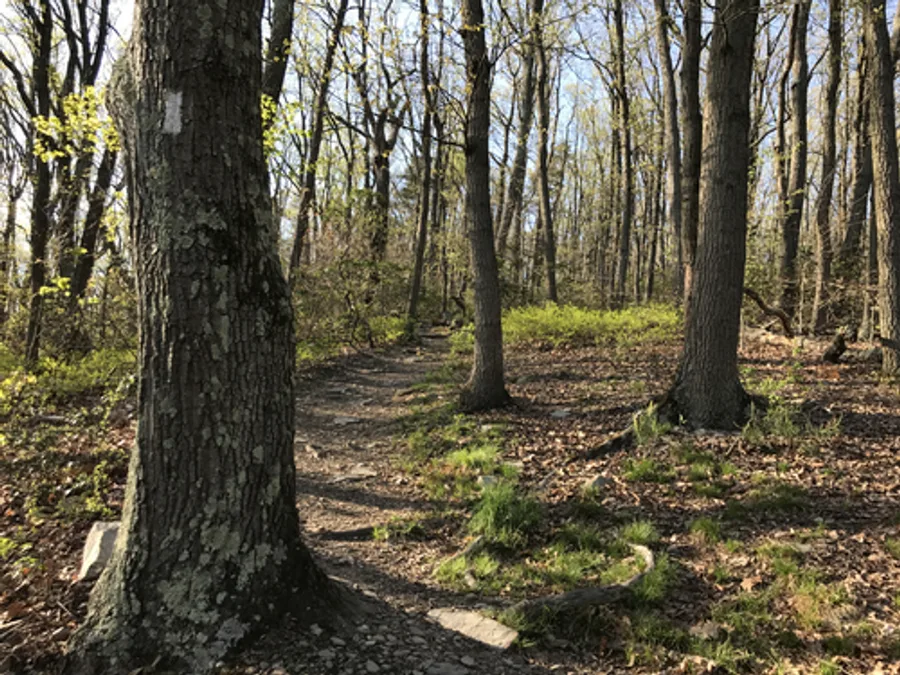
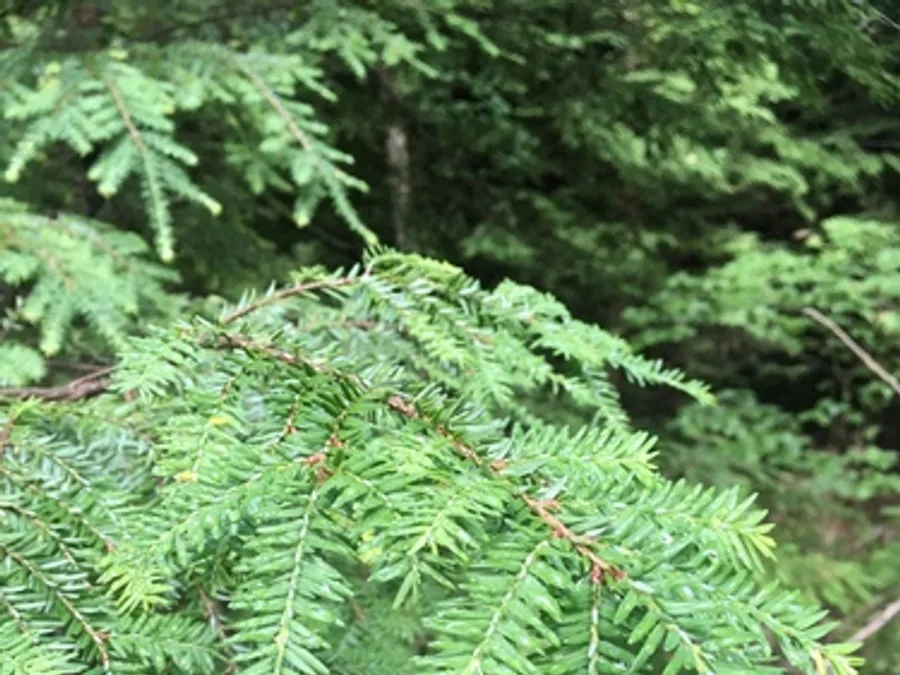
Green Ridge is an oak-hickory forest on the ridges and something wetter in the hollows, and the difference is legible if you know two or three things to look at. Each entry here is what to look at.
Booking
None. Sites are first come, first served.
Fee
$10 a night for a standard site, $20 for a group site, paid at headquarters. Maryland DNR.
Check in
Sign the sheet at headquarters when you arrive, then go to the site.
Is it free tonight?
This page cannot know. The app shows what the sign-up sheet last showed, with the photo's age.
Every photograph here is openly licensed and credited to the person who took it.
The recordings are in the app — open the nature
guide to hear them.
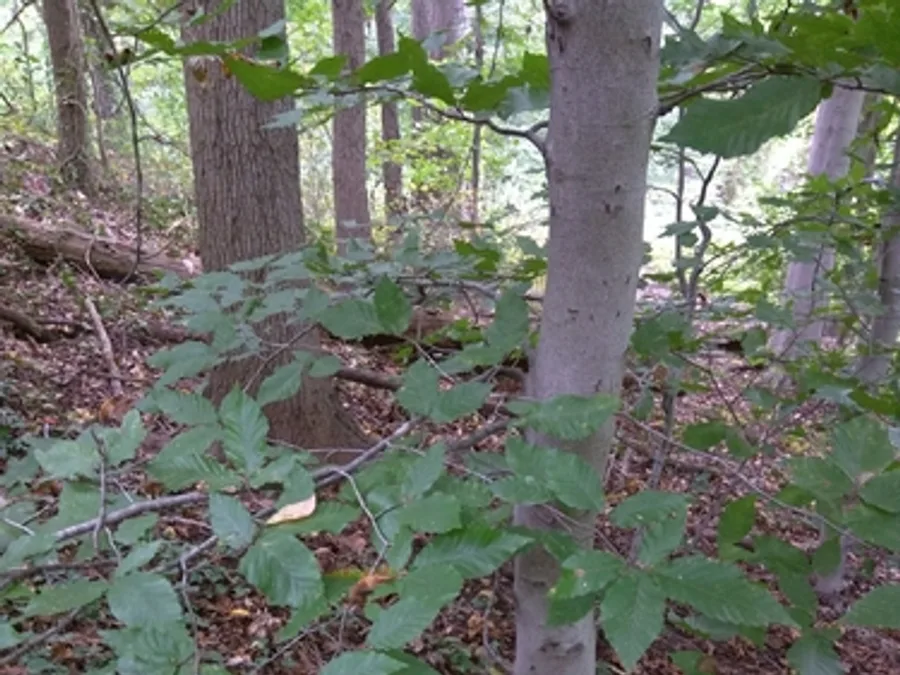
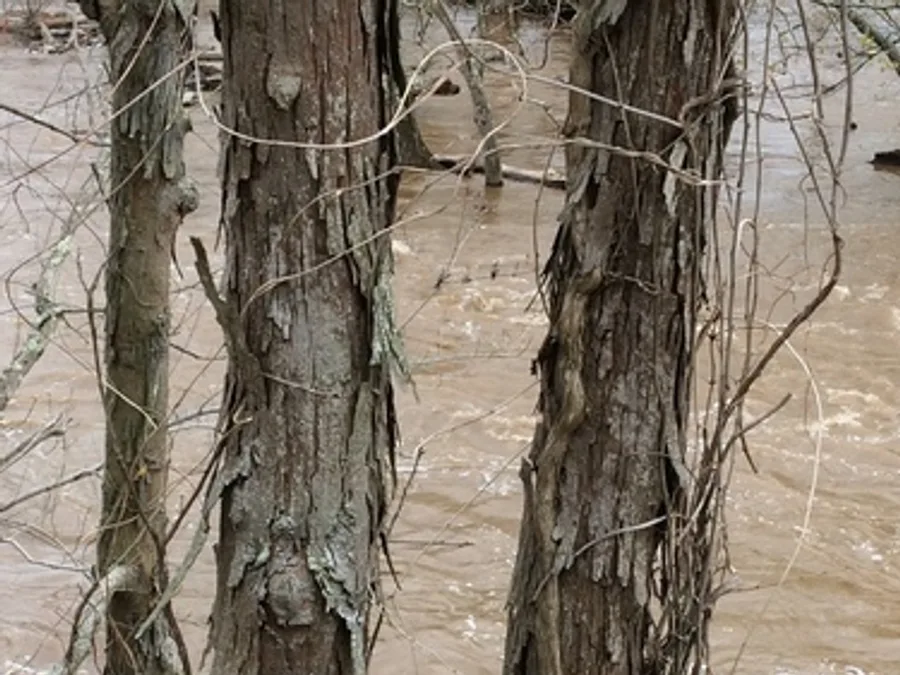
A tree with smooth, silvery-gray 'elephant-skin' bark and long, sharply pointed cigar-shaped buds; young trees hold onto pale tan papery leaves all winter.
Where to look
Shady slopes and coves; the smooth gray bark is easy to spot
When
Year-round; pale marcescent leaves stand out in winter
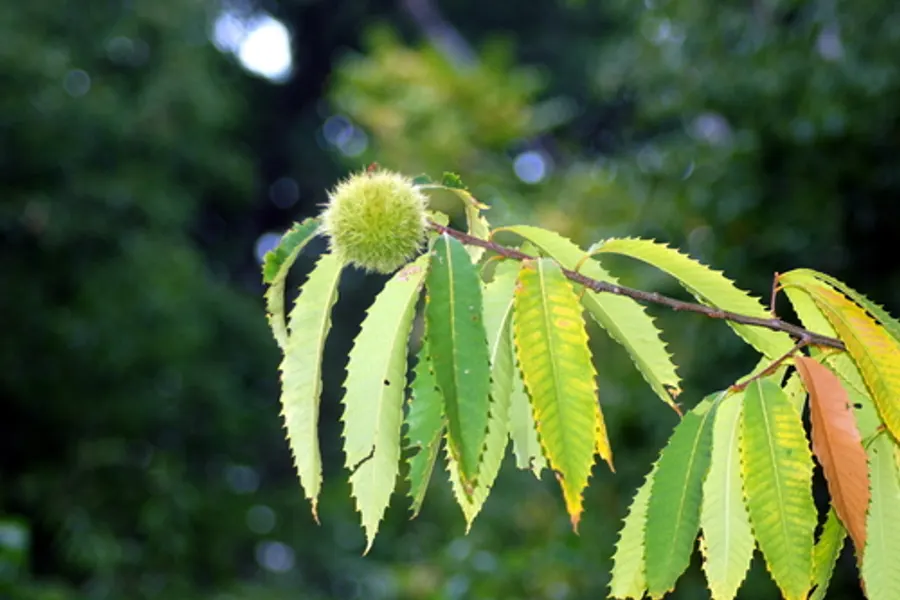
Long narrow leaves with hooked, curved teeth like a saw blade, but only ever on skinny sprouts clumped around a long-dead stump. The blight kills them back before they can grow up.
Where to look
Dry ridges among chestnut oak. Every sprout marks where a giant stood a century ago; this forest was once full of them
When
Sprout leaves May–October
Months
May to October
Easily confused with
Chestnut oak's teeth are rounded waves; American chestnut's are sharp hooks. If it's a big healthy tree, it's the oak.
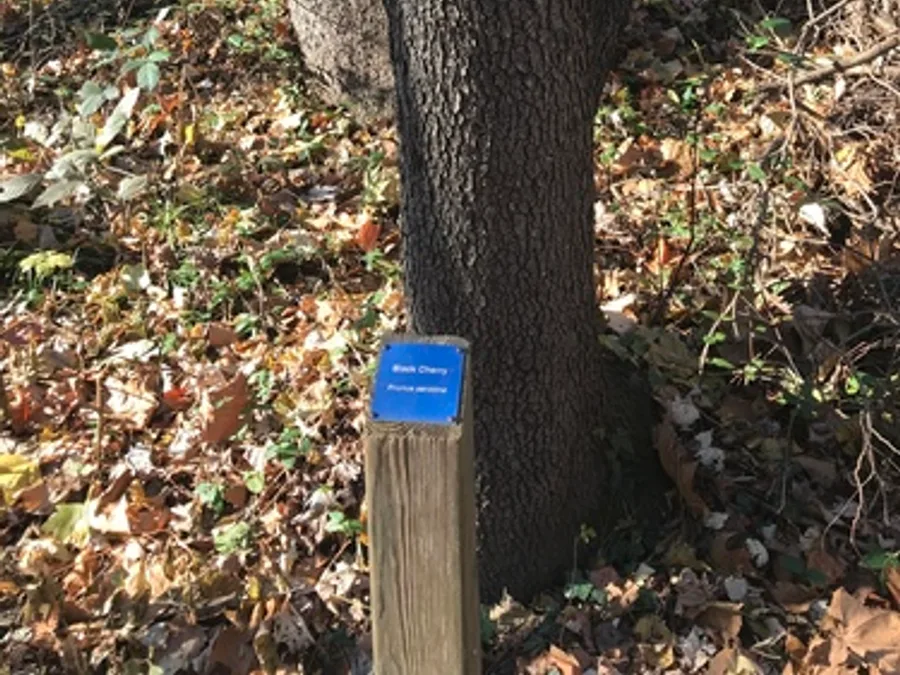
A tall tree with dark, scaly 'burnt cornflake' bark; hanging strings of small white flowers in spring become dark red-black cherries by late summer.
Where to look
Common throughout GRSF, in woods and along edges
When
White flower spikes May; dark cherries Aug–Sep
Months
May, Aug, Sep
Do not touch
The ripe cherries are edible (birds love them), but the leaves, twigs, and pits are toxic: they contain cyanide compounds, and wilted leaves are especially dangerous to livestock. Never chew the foliage or pits.
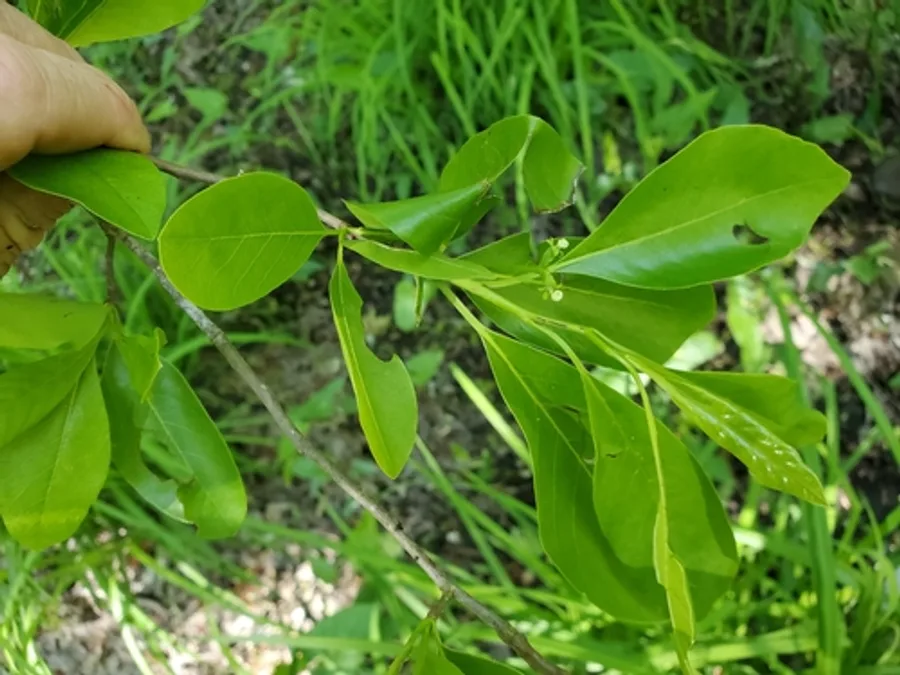
A medium tree with glossy oval leaves, branches held out stiff and horizontal like shelf brackets — and in late summer it jumps the season, turning deep scarlet while everything else is still green.
Where to look
Mixed slopes and dry ridges; old ones get blocky 'alligator' bark
When
Leaves May–October; the early scarlet show starts in August
Months
May to October
Easily confused with
Dogwood also turns early but is a small understory tree with opposite leaves; black gum's are alternate and its branching is distinctly horizontal.
The ridge-top oak: leaves with wavy rounded teeth like a chestnut's, and deeply furrowed gray-brown bark cut into thick V-grooved ridges you can fit fingers into.
Where to look
Dry shale ridgetops and upper slopes. The single most characteristic tree of Green Ridge's high ground
When
Leafed out April–October; the bark is unmistakable all year
Easily confused with
American chestnut sprouts have longer leaves with sharper, hooked teeth; white oak's lobes are deeper and its bark flaky rather than furrowed.
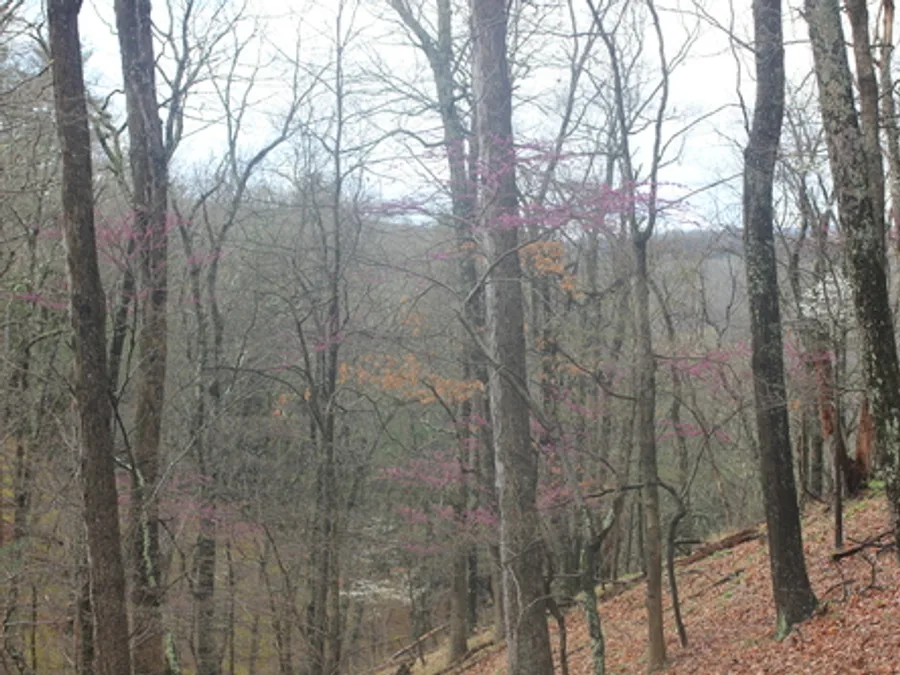
A small tree that lights up in early spring with clusters of magenta-pink flowers blooming straight out of the bare bark and branches, before the heart-shaped leaves appear.
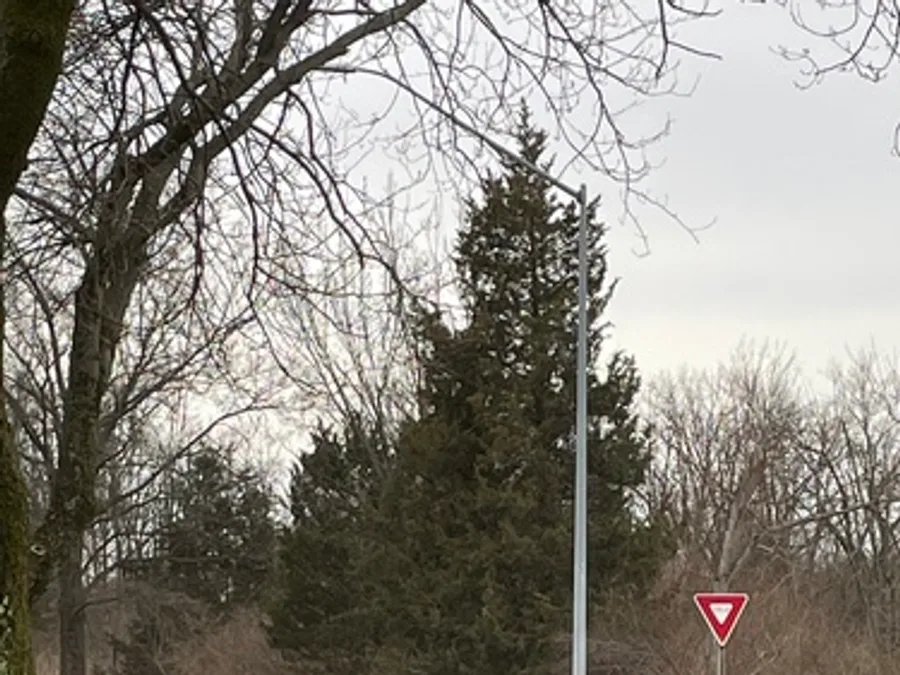
A dense columnar evergreen with scale-like braided foliage instead of needles, shreddy reddish bark, and dusty-blue berry-like cones the cedar waxwings fight over.
Where to look
Shale barrens, old fields, and fencerows, a pioneer that thrives where almost nothing else can
When
Evergreen; blue 'berries' ripen late summer into winter
Easily confused with
It's a juniper, not a true cedar; nothing else at GRSF has braided scale-foliage and blue berries.
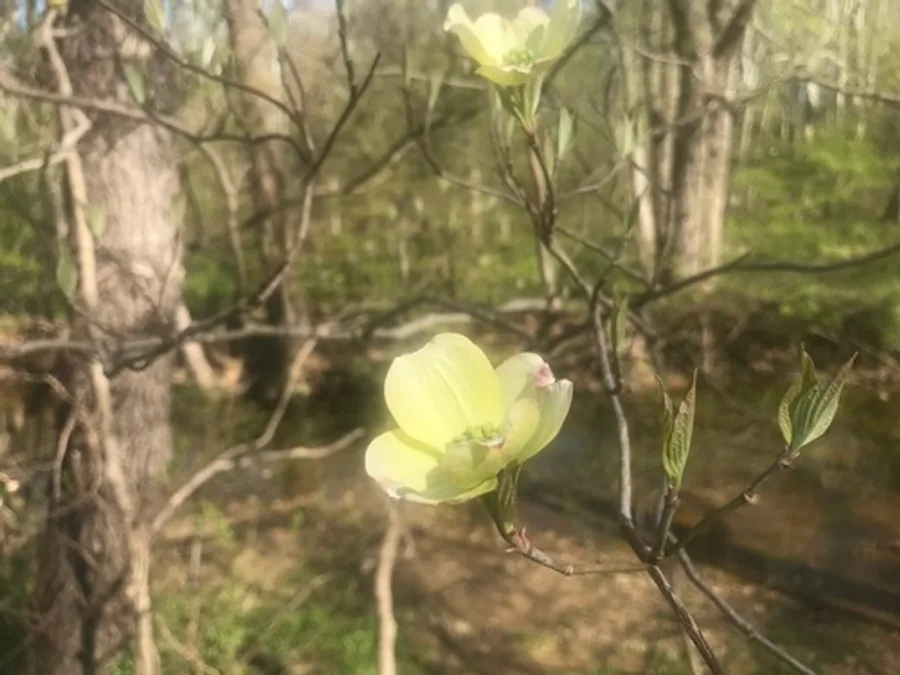
A small tree with layered horizontal branches and showy white 'flowers' that are really four notched bracts; tight clusters of glossy red berries in fall.
Where to look
Understory of open woods and edges
When
White bracts April–May; red berries and burgundy leaves in fall
Months
Apr, May, Sep, Oct
Do not touch
The bright red berries are for the birds. They're mildly toxic to people, so look, don't snack.
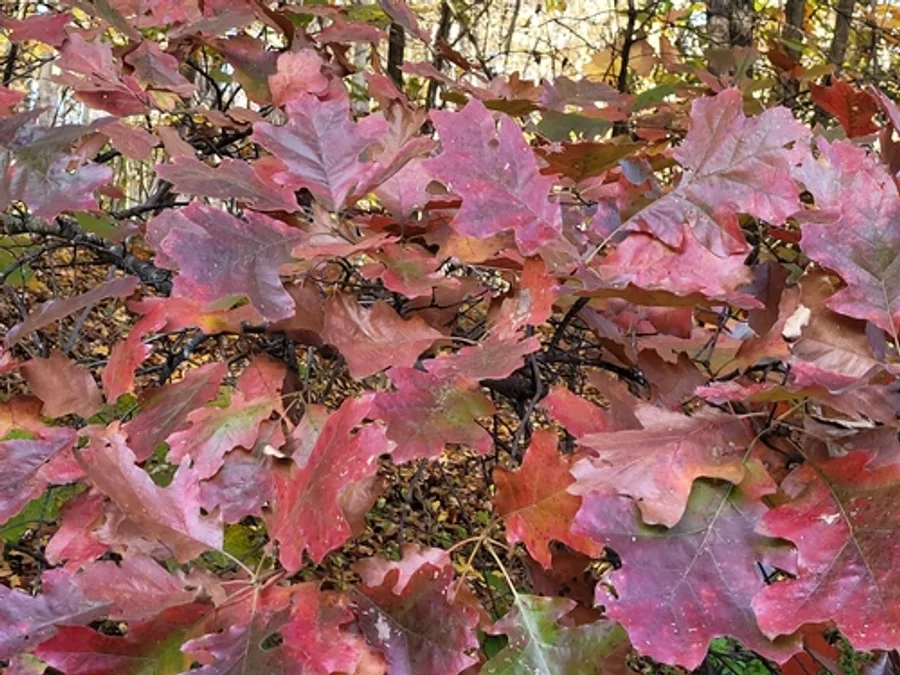
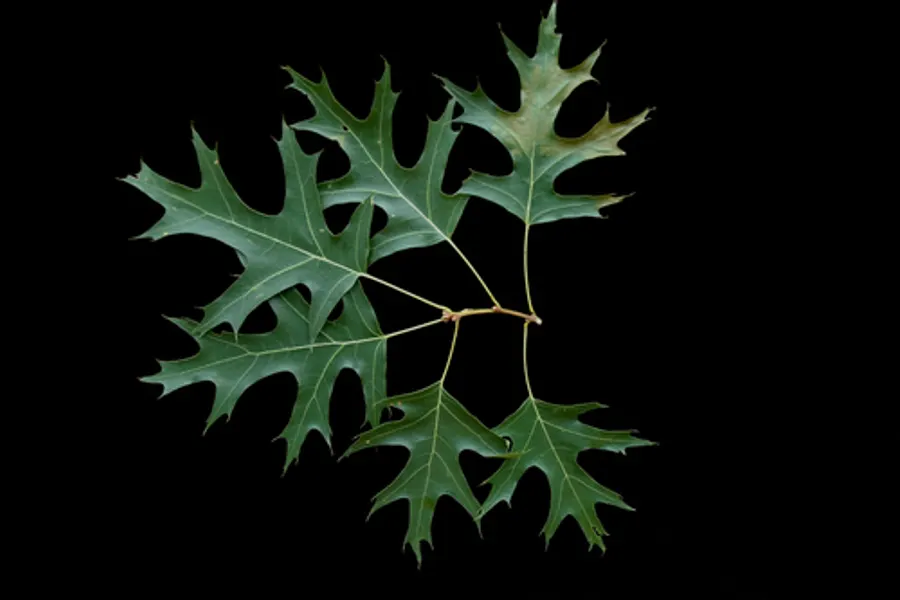
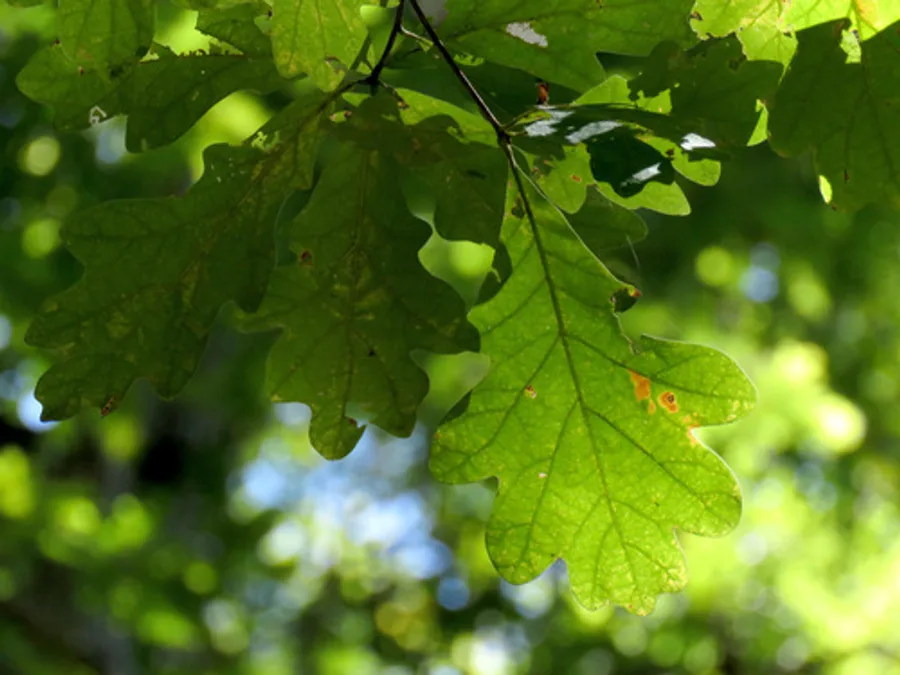
A big canopy tree with leaves cut into pointed lobes tipped with tiny bristles; older trunks have dark bark with smooth, flat, pale ridges like ski tracks.
Where to look
One of the dominant canopy trees on GRSF's dry ridges
When
Leaves spring–fall; acorns and color in fall
Months
May to October
Easily confused with
White oak has rounded, bristle-free lobes and light gray scaly bark; red oak's lobes end in sharp bristle tips.
A rugged pine with stiff needles in bundles of three and its signature party trick: tufts of green needles sprouting straight out of the thick, platy trunk bark.
Where to look
Dry ridges and rocky points. A fire-adapted species that resprouts where other pines die
When
Evergreen year-round
Easily confused with
Virginia pine's needles come in twos and its trunk stays clean; if needles grow from the bark itself, it's pitch pine.
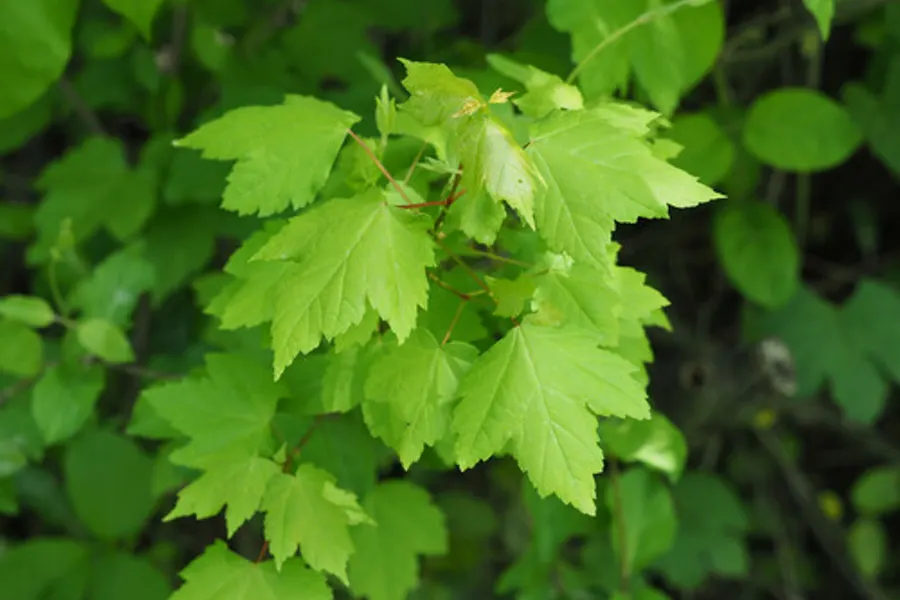
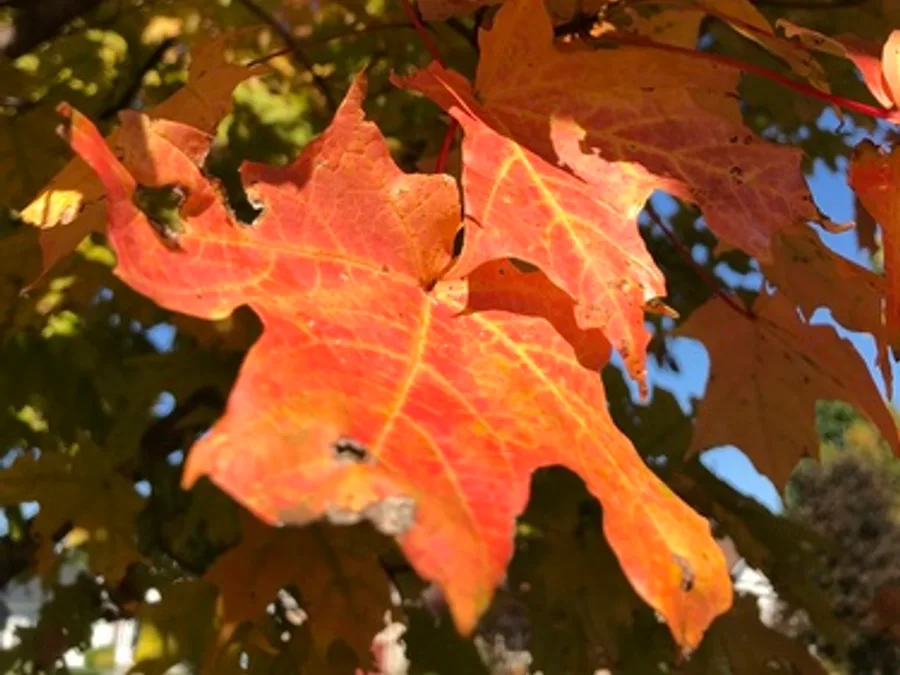
A medium tree with leaves in opposite pairs, each with 3–5 sharp-toothed lobes; red flowers, red leaf-stalks, and famously fiery red-orange fall color.
Where to look
Wet soils, edges, and second-growth woods throughout GRSF
When
Red flowers very early spring; brilliant color in fall
Months
Mar, Sep, Oct
Easily confused with
Sugar maple leaves are greener with smooth-edged lobes and U-shaped notches between them; red maple's lobe edges are toothed with sharper V-notches.
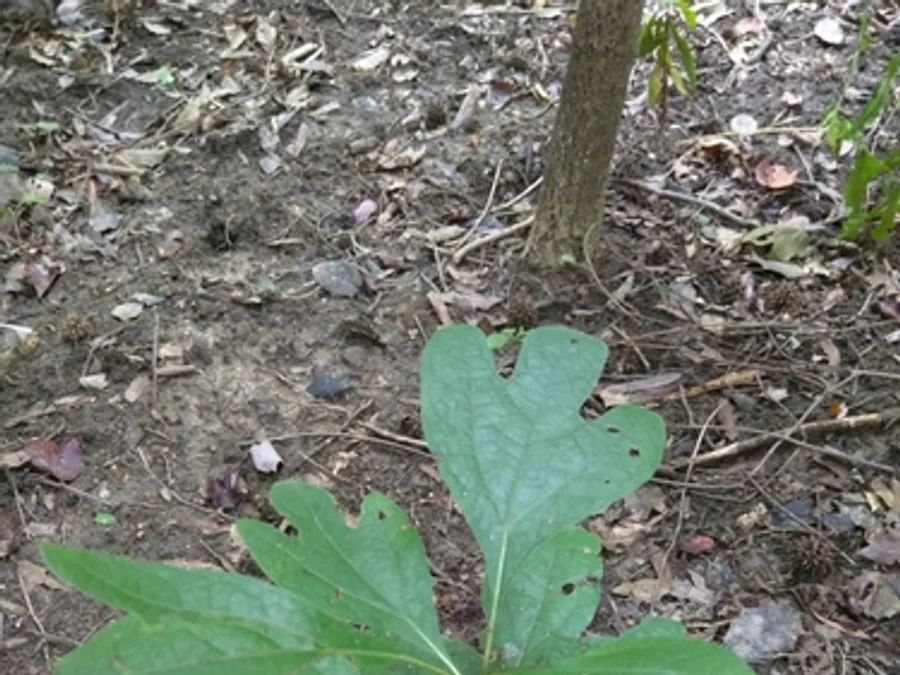
A small-to-medium tree famous for wearing three leaf shapes at once: a plain oval, a two-lobed 'mitten,' and a three-lobed 'ghost'; snapped twigs smell sweet and root-beery.
Where to look
Forest edges and old clearings; common at GRSF
When
Aromatic leaves spring–fall; brilliant orange-red color in fall
Months
May to October
Do not touch
Fun to sniff, but skip the old-time root tea. The oil (safrole) is now known to be a carcinogen.
You'll know it across a campsite: bark peeling away in foot-long gray strips curling at both ends, like the tree is mid-molt. Five leaflets, big sweet nuts.
Where to look
Richer lower slopes and stream bottoms. Also prime bat roost bark, so leave the strips be
When
Leaves May–October; nuts drop September–October
Months
May to October
Easily confused with
Only shagbark shags. Every other hickory here keeps its bark tight.
A shapely tree with opposite five-lobed leaves whose edges are smooth and whose notches between lobes are rounded and U-shaped; dependable golden-orange in fall.
Where to look
Cool, moist coves and north-facing slopes
When
Leaves spring–fall; yellow-orange color in fall
Months
May to October
Easily confused with
Red maple has toothed lobe edges and sharper notches; sugar maple's lobes are smooth-edged with rounded notches.
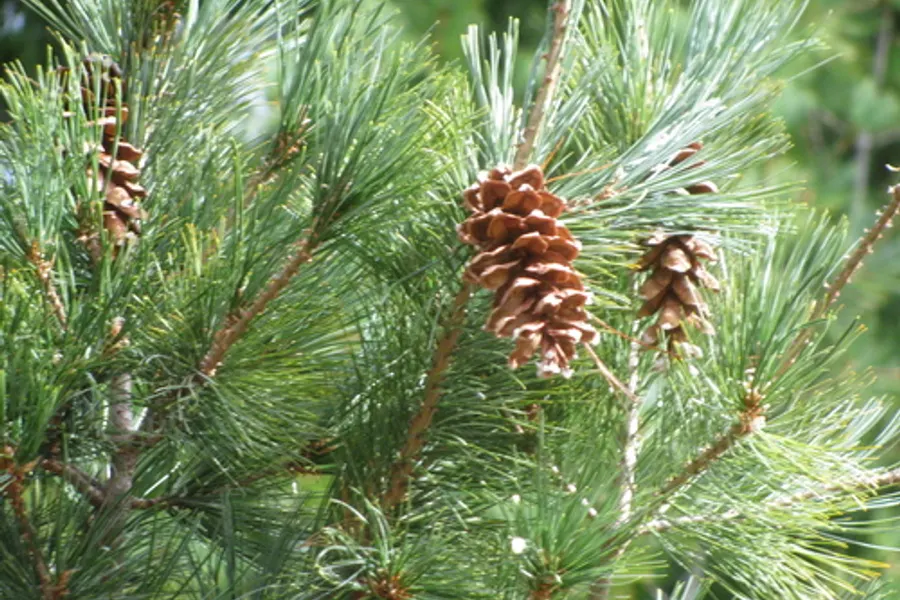
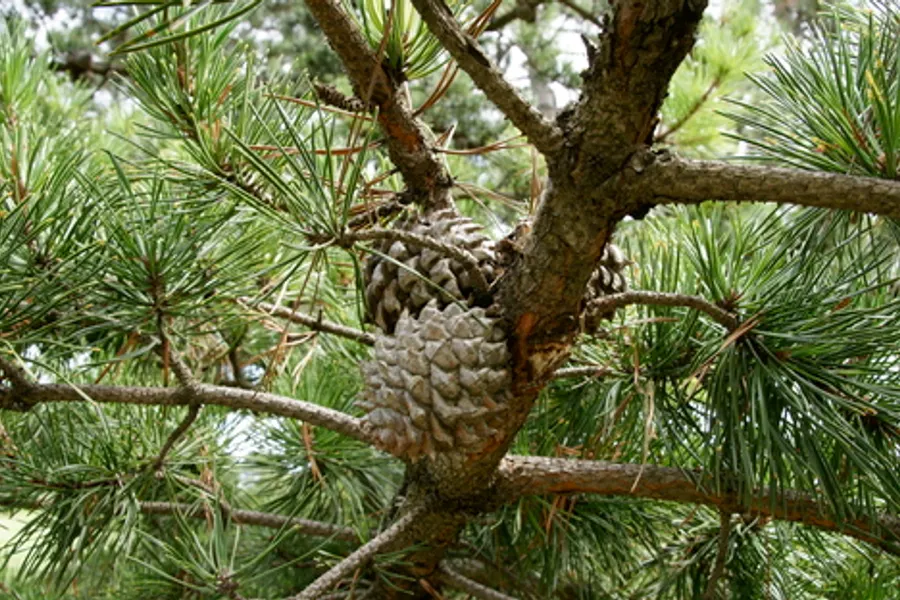
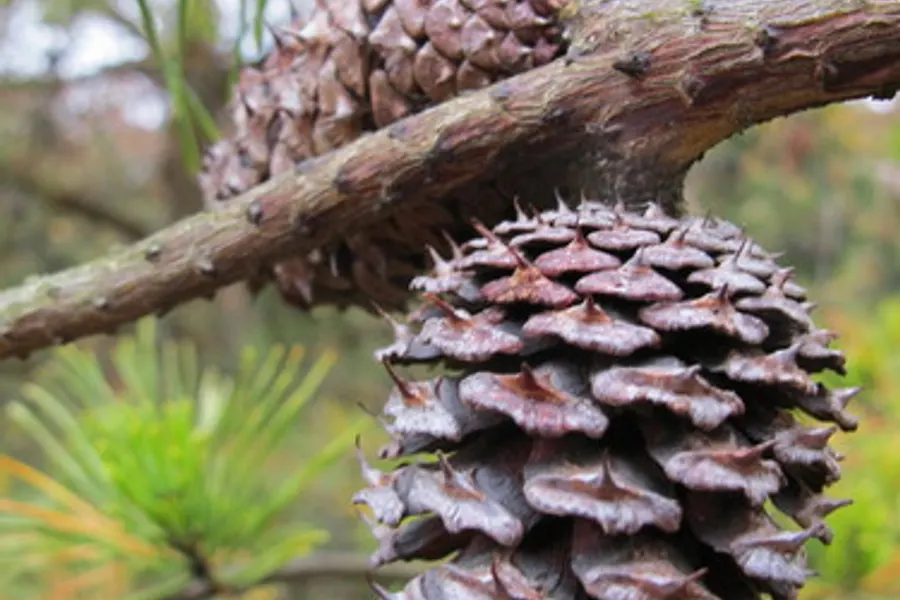
A gnarled ridge-crest pine with paired needles and massive lopsided cones armored in stout curved spikes, cones that stay clamped shut on the branch for years.
Where to look
Exposed rocky ridgelines. An Appalachian endemic that grows almost nowhere outside these mountains
When
Evergreen; look for the spike-armored cones any season
Easily confused with
No other local pine has cones like medieval weapons; Virginia pine's cones are small and lightly prickled.
Do not touch
Those cone spikes are sharp enough to draw blood, so pick cones up by the stem end.
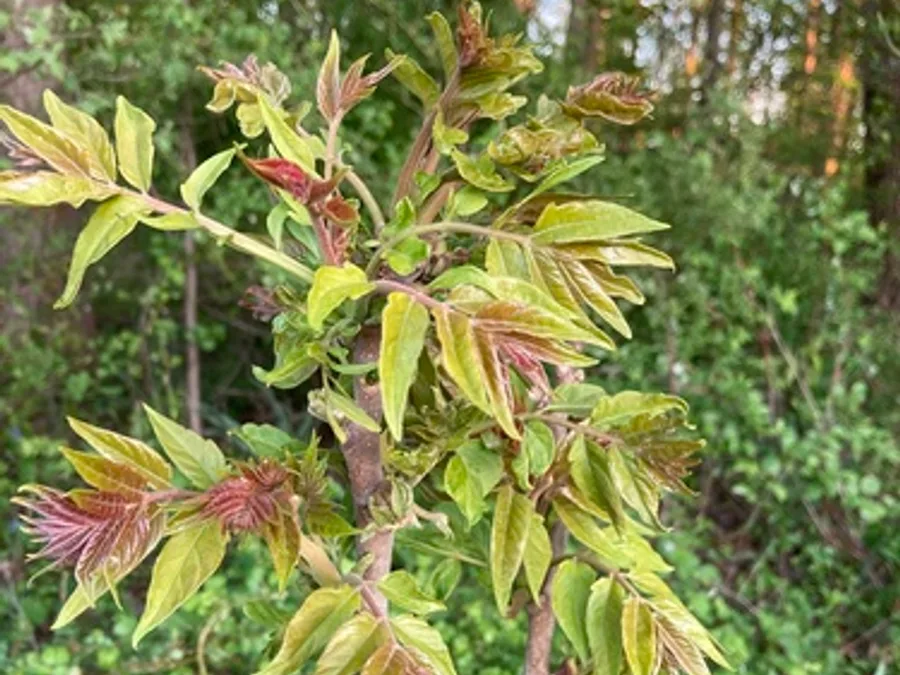
A fast-growing tree with long compound leaves of 10–40 leaflets; crushed leaves and broken twigs give off a rank, peanut-butter or cat-urine stink.
Where to look
Roadsides, clearings, and disturbed ground, where it's aggressively dominant
When
Leaves and smell strongest spring–summer
Months
May to September
Easily confused with
Native sumacs and walnuts look similar, but their leaflets are toothed and don't reek. Tree-of-heaven leaflets are smooth-edged with a couple of bumps near the base.
Do not touch
The sap can irritate skin in sensitive people, so avoid handling broken stems bare-handed.
Invasive
A top invasive at GRSF and the favorite host of the spotted lanternfly. Report sightings to MD iMapInvasives (imapinvasives.org). Don't transplant it, and never spread its seeds.
Tulip Tree / Yellow Poplar Liriodendron tulipifera
Often seen
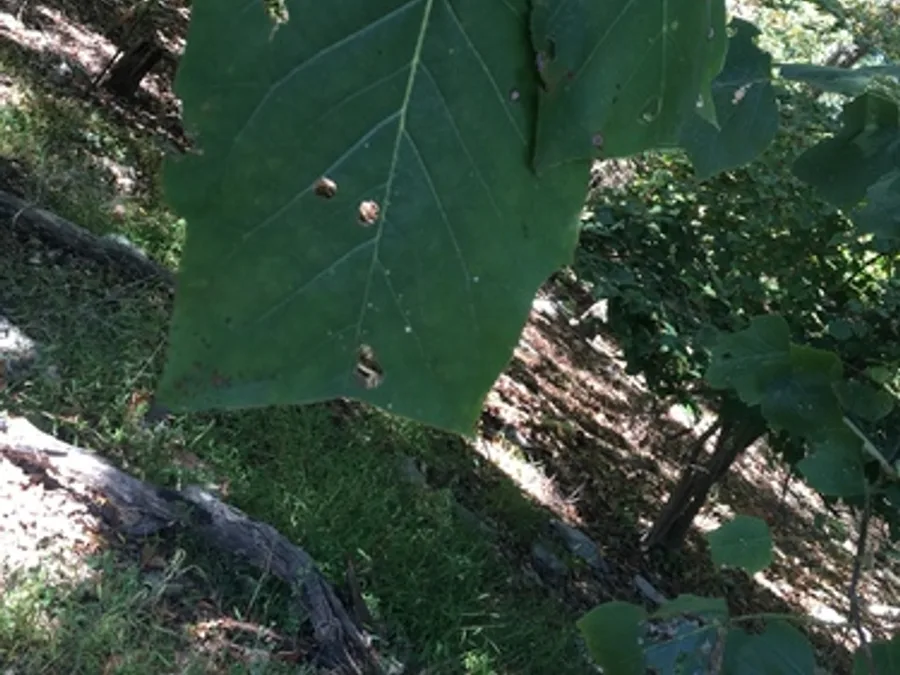
A very tall, arrow-straight tree with unmistakable four-pointed leaves shaped like a tulip outline (or a cat's face); orange-and-green tulip-like flowers bloom high in the crown.
Where to look
Moist coves and lower slopes. Among the tallest trees in the forest
A scrappy, twisty pine with short twisted needles in pairs and small prickly cones that hang on for years. Rarely tall, often leaning, always tough-looking.
Where to look
Dry shale slopes and barrens edges. One of five native GRSF pines and the most common
When
Evergreen. Easiest to pick out in winter when the oaks are bare
Easily confused with
Pitch pine has needles in threes with tufts sprouting straight from the trunk; table mountain pine has much heavier, spike-armored cones.
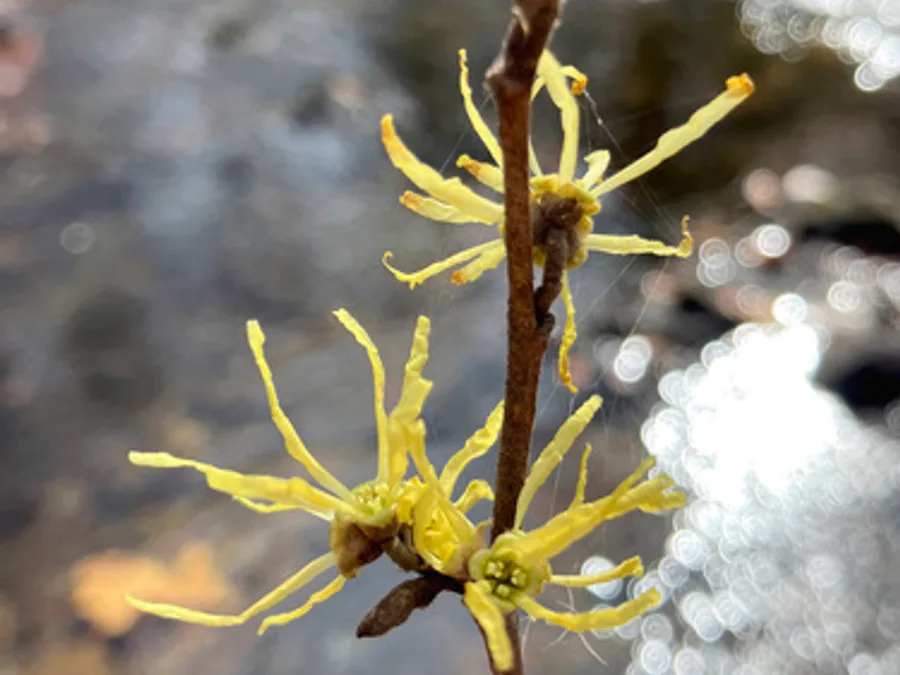
A crooked little understory tree with scalloped, lopsided leaves. In late fall, after its leaves drop, it blooms: spidery yellow ribbon-flowers on bare twigs.
Where to look
Shaded lower slopes and stream banks
When
Blooms October–November when everything else is done; leaves May–October
Months
May to November
Easily confused with
Nothing else here flowers in November. Off-season, the uneven leaf base is the tell.