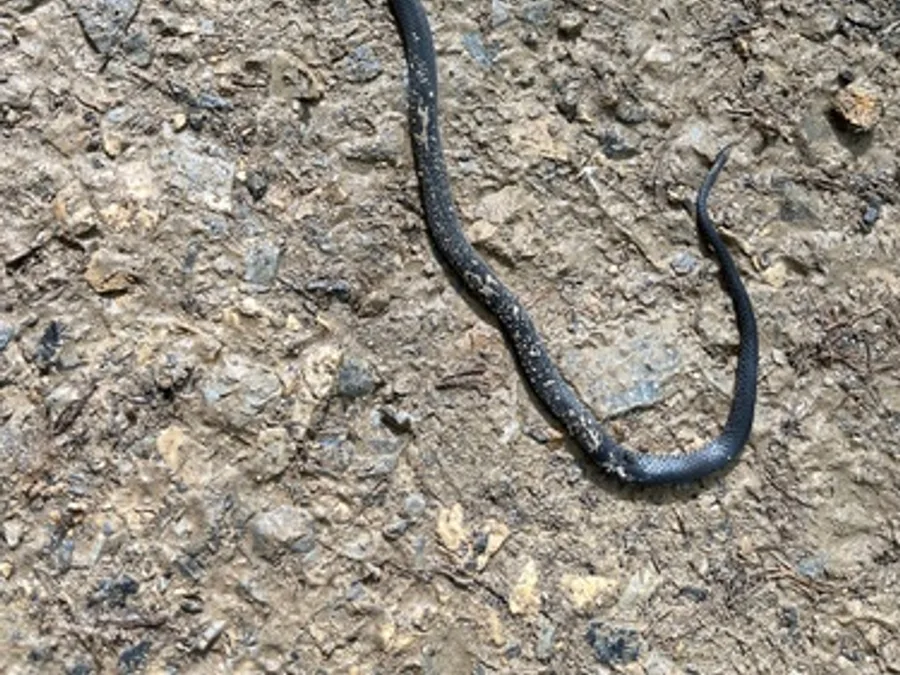
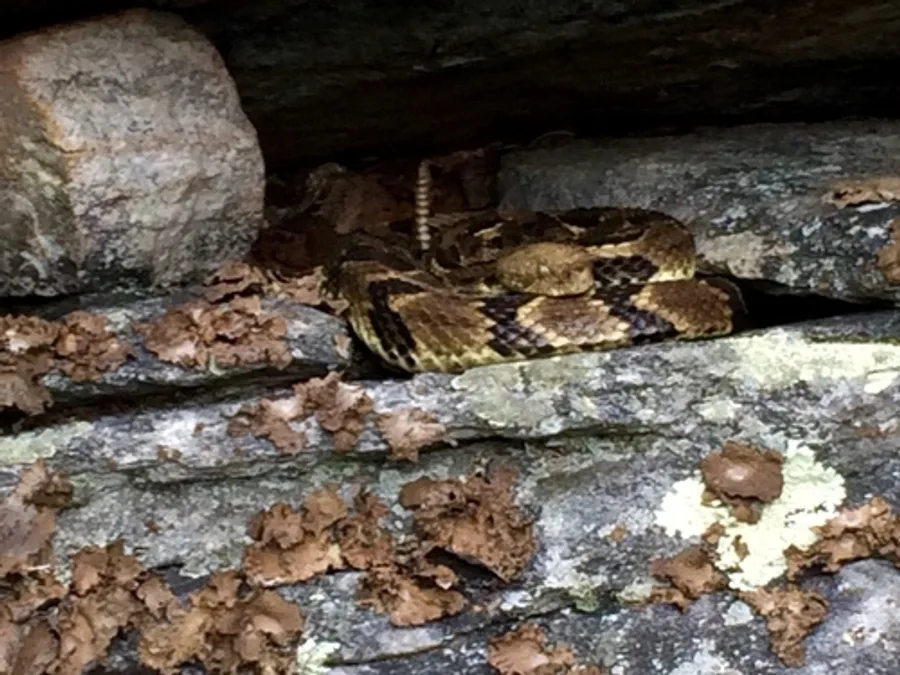
Maryland has two venomous snakes and this forest has both. Nearly everything else on this list is harmless, and the reason to be able to tell them apart is so that the harmless ones stop being alarming.
Booking
None. Sites are first come, first served.
Fee
$10 a night for a standard site, $20 for a group site, paid at headquarters. Maryland DNR.
Check in
Sign the sheet at headquarters when you arrive, then go to the site.
Is it free tonight?
This page cannot know. The app shows what the sign-up sheet last showed, with the photo's age.
Every photograph here is openly licensed and credited to the person who took it.
The recordings are in the app — open the nature
guide to hear them.
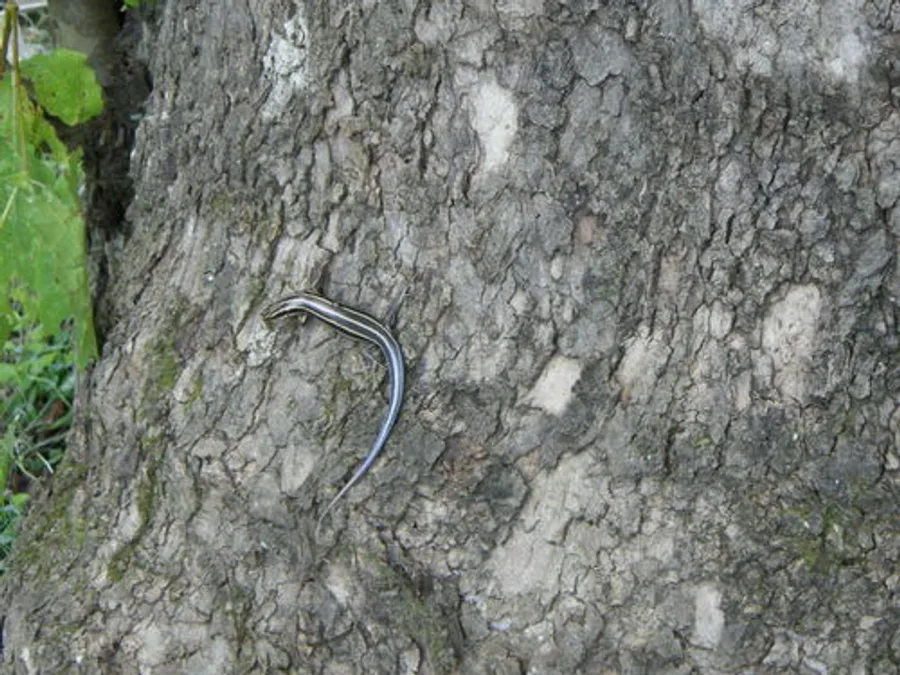
A glossy, fast lizard. Juveniles are showstoppers with five cream stripes and an electric-blue tail; big males fade to bronze with orange-red jaws in spring.
Where to look
Sunny rock piles, stumps, and cabin foundations, usually a streak vanishing into a crack
When
Active April–September
Months
April to September
Easily confused with
Broad-headed skinks get larger and climb trees more; young of both have blue tails and are functionally identical at camp distance.
Do not touch
Harmless, but don't grab: the tail breaks off as an escape trick (it grows back, but it costs the lizard dearly).
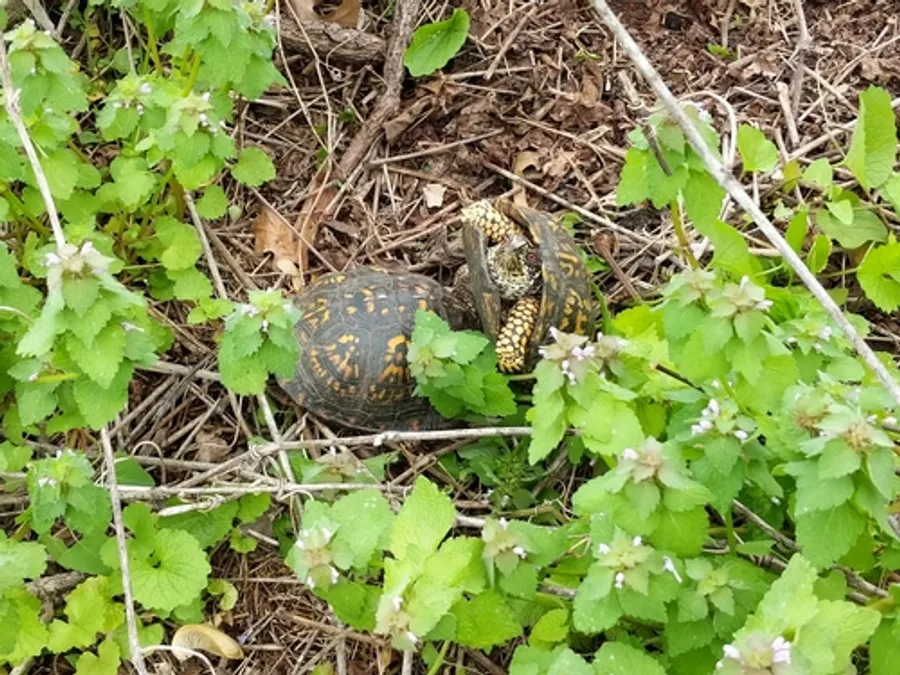
A high-domed land turtle painted in yellow-orange flame patterns on dark shell, each one's pattern unique, with a hinged bottom shell it can close completely.
Where to look
Forest floor and dirt roads, especially mornings after rain. Many GRSF box turtles are older than the state forest's roads
When
Active April–October; out in numbers after summer rain
Months
April to October
Easily confused with
Wood turtles (rare, near streams) are flatter with a sculpted shell; a high dome and hinged plastron means box turtle.
Do not touch
If one is crossing a road, it's fine to move it: a short distance in the direction it was already heading. Never take one home or 'relocate' it: box turtles navigate by a mental map of a few home acres and will spend years trying to walk back.
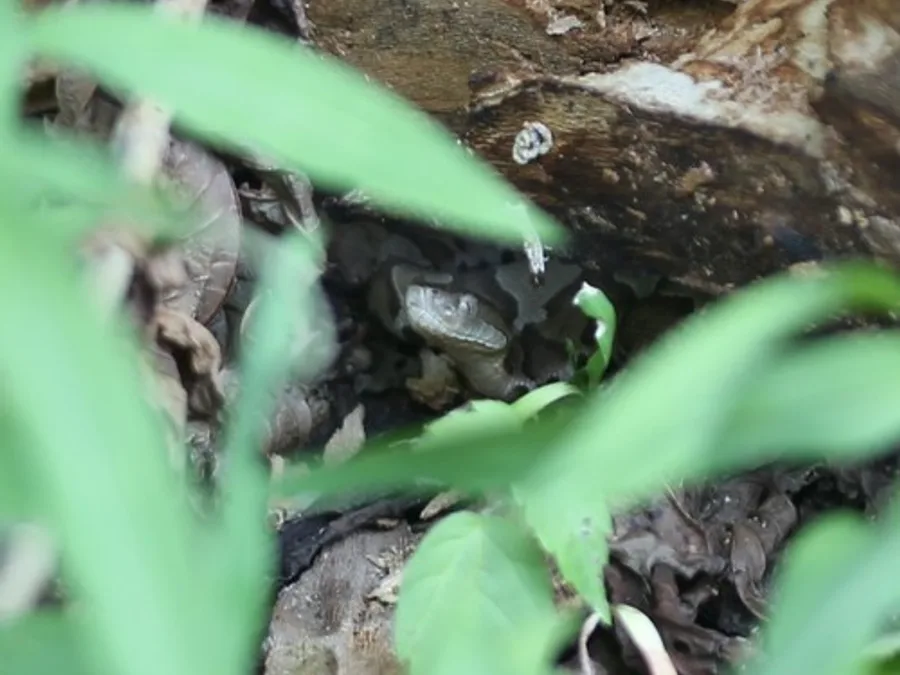
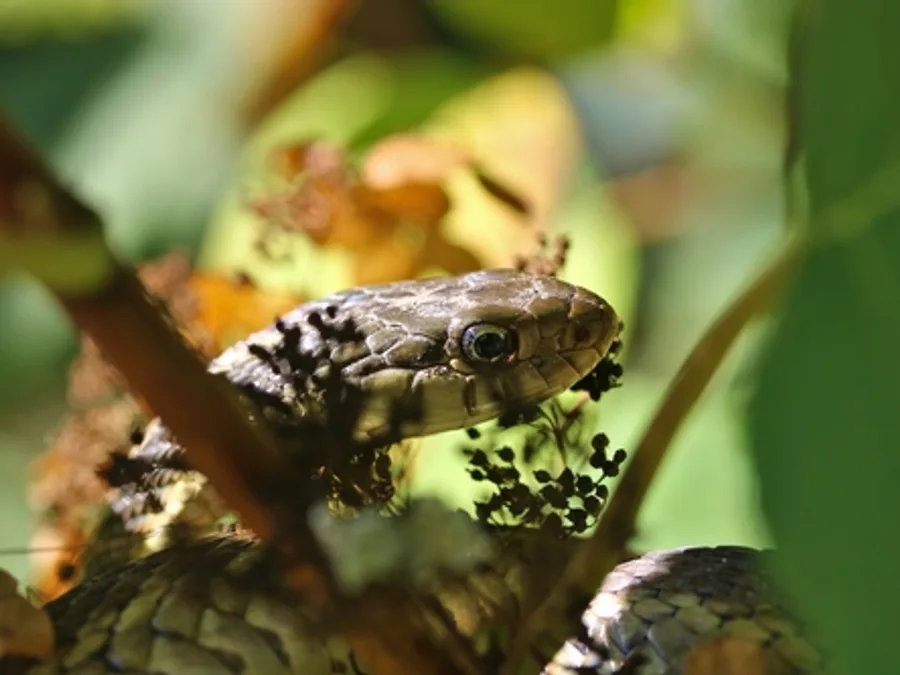
A copper-and-tan snake wearing dark hourglass or Hershey-kiss crossbands (narrow on the spine, wide on the sides) with camouflage so good against oak leaves it borders on unfair.
Where to look
Leaf litter, stone walls, log piles, and creek edges. Use a headlamp around camp on summer nights
When
Active April–October; most encounters are dusk and after dark in summer
Months
April to October
Easily confused with
Harmless juvenile ratsnakes and watersnakes get mistaken for copperheads constantly. The true copperhead's bands are hourglasses viewed from above, wide at the sides.
Do not touch
Venomous. Bites are painful but almost never life-threatening, and almost always happen to an unseen snake underfoot or a deliberately handled one. Step ON logs then over, light your path at night, and leave it be. If bitten, go to a hospital; no cutting, sucking, or ice.
A slim snake with three pale stripes running the length of a dark checkered body. This is the generalist you'll see hunting worms at the edge of camp on a warm morning.
Where to look
Grassy edges, stream banks, under anything flat lying on the ground
When
Active March–November, earliest and latest snake of the year
Months
March to November
Easily confused with
Ribbon snakes are skinnier with cleaner stripes and stay near water; either way, striped means harmless here.
Do not touch
Harmless, though it may musk impressively if grabbed, which is a good argument for not grabbing it.
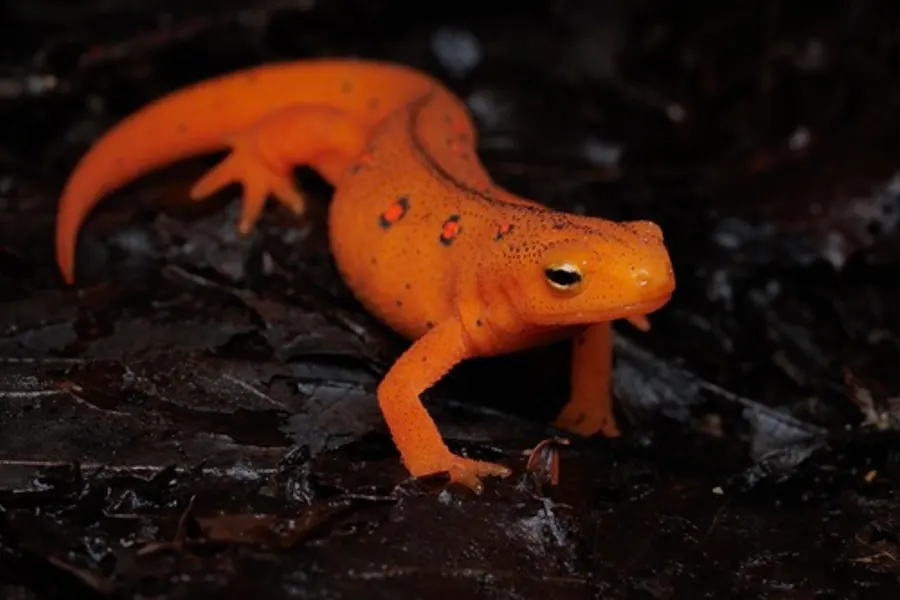
In its wandering 'red eft' stage: a small, slow, day-glo orange salamander with darker-ringed spots, strolling the trail in broad daylight like it owns the place. It kind of does.
Where to look
Damp trails and mossy woods after rain. The boldness is real: its skin toxins make almost nothing willing to eat it
When
Efts walk the forest floor after rain, May–October; adults live olive-green in ponds
Months
May to October
Easily confused with
Nothing else here is this orange in daylight. Red salamanders are chunkier, faster, and stay hidden.
Do not touch
The orange is a warning label: skin toxins. A gentle look is fine; wash hands after, and never a snack for dogs.
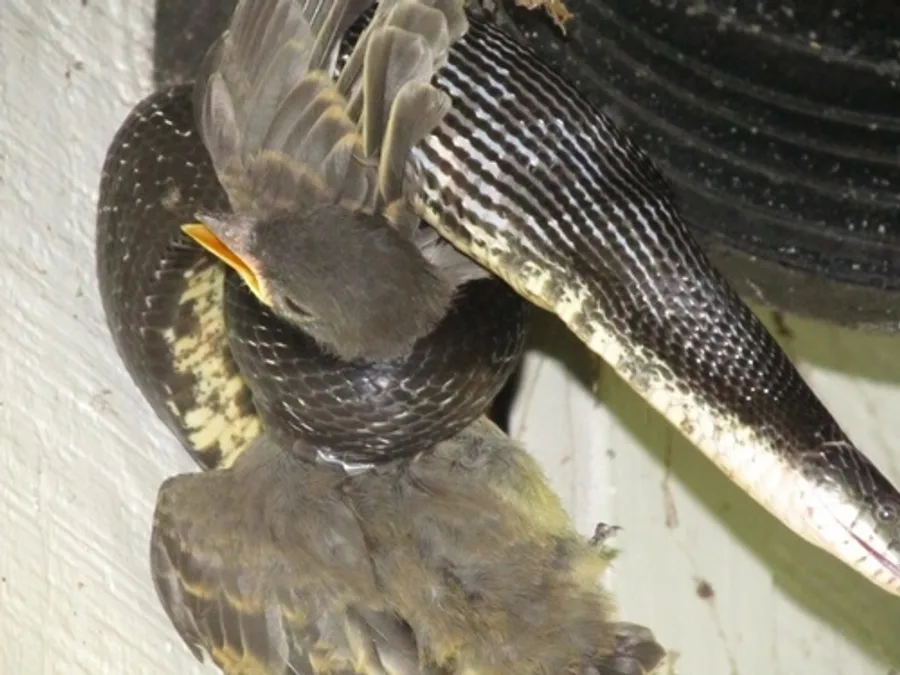
The big black snake: glossy, up to six feet, white chin, moving with unhurried confidence along the ground or straight up a tree trunk. The large snake campers actually meet most.
Where to look
Everywhere, from campsite edges to old buildings to tree cavities; a superb climber after bird nests and mice
When
Active April–October
Months
April to October
Easily confused with
Black racers are matte, slimmer, and gone in a blink; ratsnakes are glossy with a faint checkerboard beneath and take their time.
Do not touch
Completely harmless and a champion rodent controller. It may musk or bluff-vibrate its tail in leaves (doing a rattlesnake impression), but that's theater, not danger.
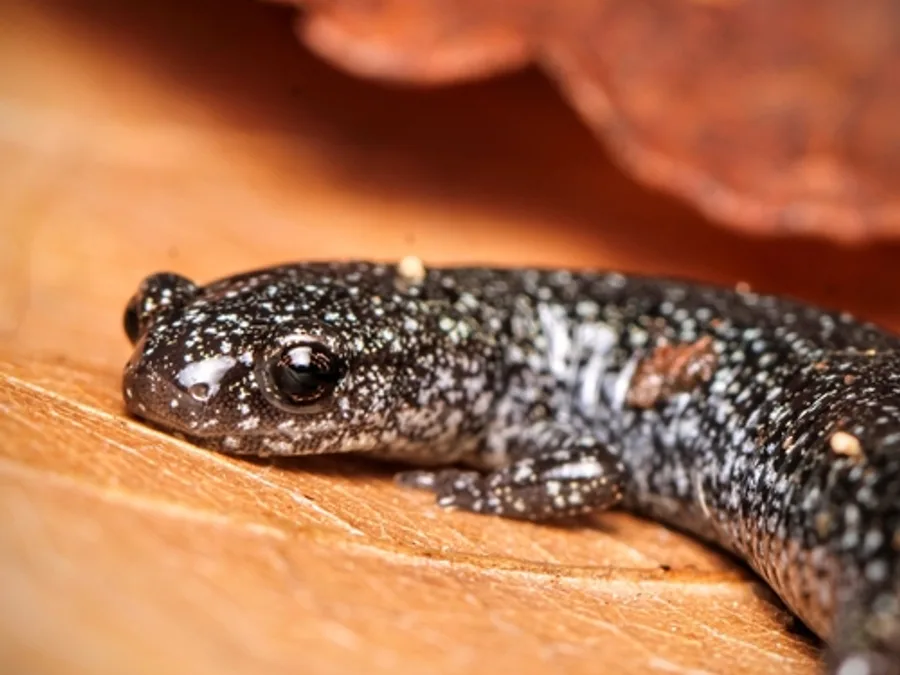
A slender salamander, matchstick-sized, with a straight rust-red stripe down its back (or all-dark 'leadback' phase), found under nearly any damp log you lift.
Where to look
Under logs, bark, and flat rocks in moist woods. By biomass, likely the most abundant vertebrate in this forest
When
Under cover year-round; surface-active on rainy nights spring and fall
Months
March to November
Easily confused with
Two-lined salamanders are yellowish and streamside; the red stripe on a forest-floor log-dweller is diagnostic.
Do not touch
If you must, wet your hands first: dry skin, sunscreen, and bug spray all burn amphibian skin. Lift the log, look, and set it back exactly as it was; the log is the whole neighborhood.
A pencil-thin, pencil-length snake in smooth slate gray with a neat orange-yellow collar — and a belly of surprising sunset orange it may flash if alarmed.
Where to look
Under flat rocks, bark slabs, and old boards. The classic flip-a-rock find; always put the rock back
When
Active April–October, but secretive, found more than seen
Months
April to October
Easily confused with
Juvenile brown snakes lack the collar; nothing else combines slate gray with that orange necklace.
Do not touch
Harmless and docile. It almost never bites anything bigger than a salamander.
A heavy-bodied snake in yellow-and-black or nearly all-black phases with dark chevron bands and the namesake tail rattle, usually coiled quietly, counting on you not to notice.
Where to look
Rocky ridgetops, shale slopes, and log edges. This is one of Maryland's strongholds for the species
When
Active April–October; sunning on rocks in spring and fall, shade in high summer
Months
April to October
Easily confused with
Copperhead is smaller with hourglass bands and no rattle; harmless milksnakes and watersnakes get wrongly executed for both. When unsure, just step back.
Do not touch
Venomous — give it fifteen feet and it will want nothing to do with you. Nearly all bites involve someone handling or cornering the snake. Watch hand and foot placement on rocks; use a light at night. If bitten: stay calm, skip every folk remedy, and get driven to a hospital. And don't kill it: it's protected and it was here first.